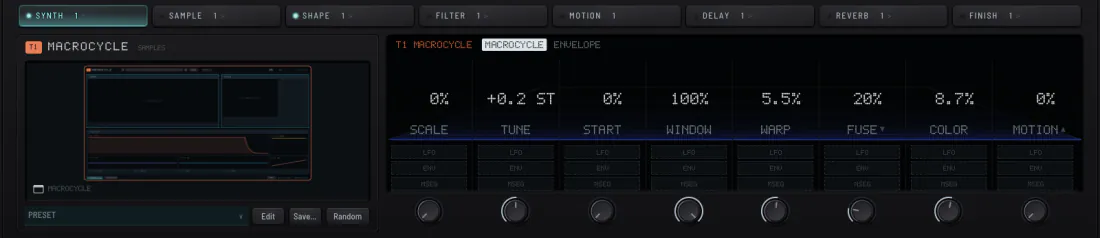
Kick
KICK
Every kind of kick in one machine. A MODEL knob chooses the circuit, from a tuned sine to FM and additive bodies; an attack page and a decay page shape the thump and the tail.
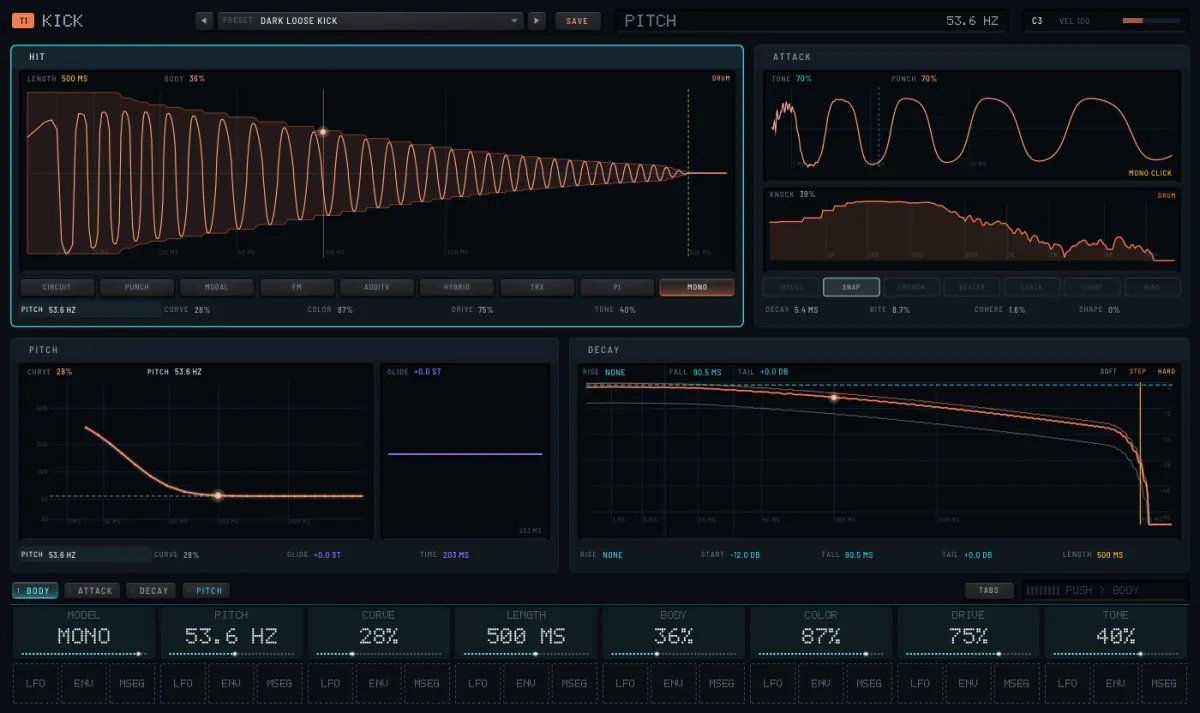
A machine is the sound source of a track. Each has a description, a screenshot and sound examples.
Machines come in twelve groups, the drums first, and are chosen from the list under the sound card (or with the Up and Down keys, or the Push's Tempo knob). A machine put on a track has its defaults slightly varied each time.
Each example is one note (a single hit for drums) from the machine alone, with no effects, at the default sound and on a few factory presets. Bass notes are around C2, pads around C3 and leads around C4. Levels are matched.
Every kind of kick in one machine. A MODEL knob chooses the circuit, from a tuned sine to FM and additive bodies; an attack page and a decay page shape the thump and the tail.
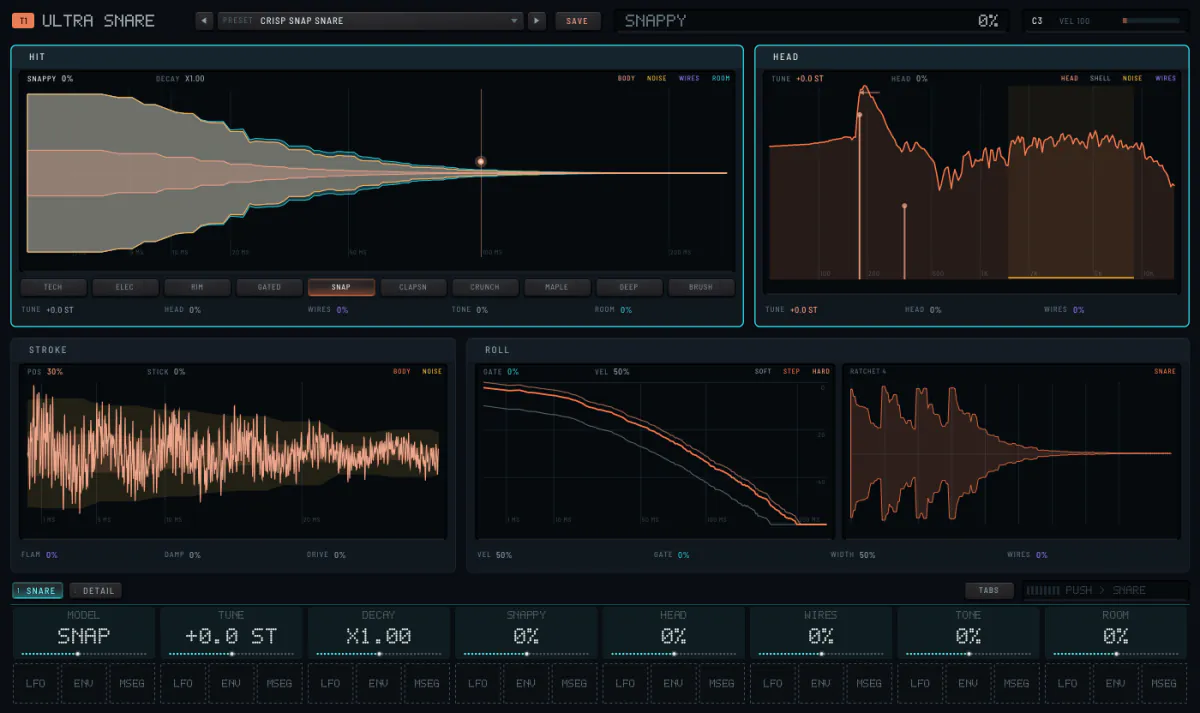
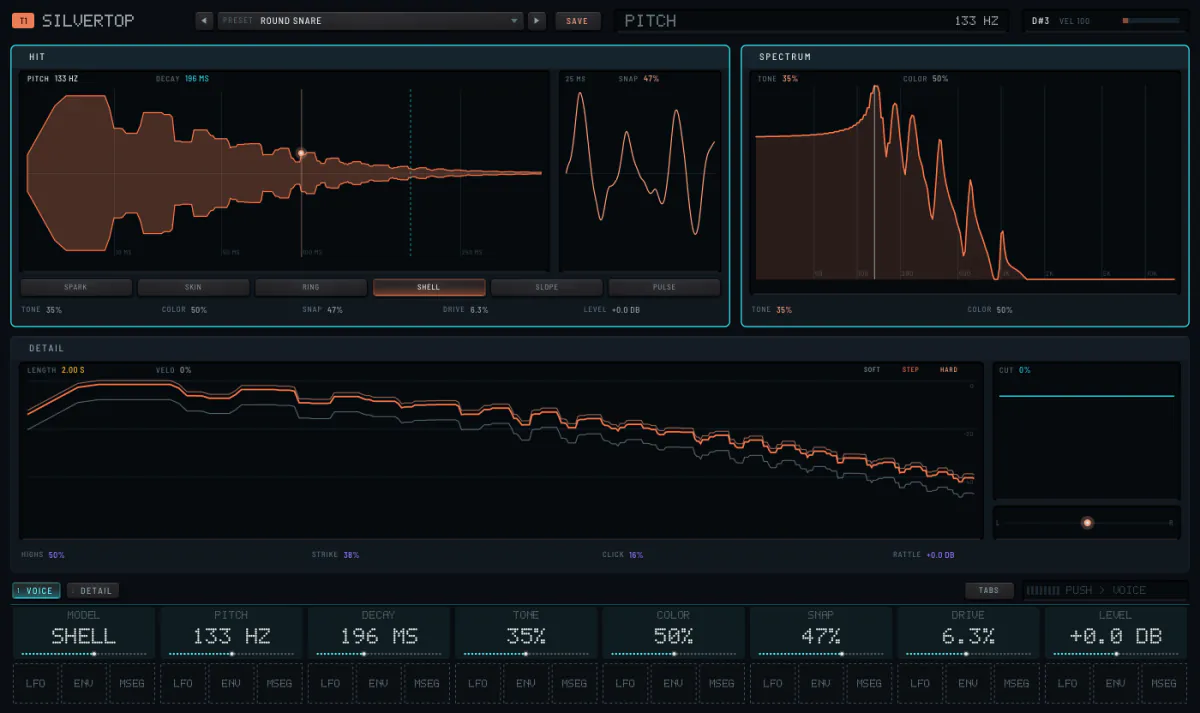
A snare synthesised without recordings. Electronic and tech snares, cross-sticks, gated and snapped ones, and modelled maple, deep and brush snares whose wires the head sets buzzing.
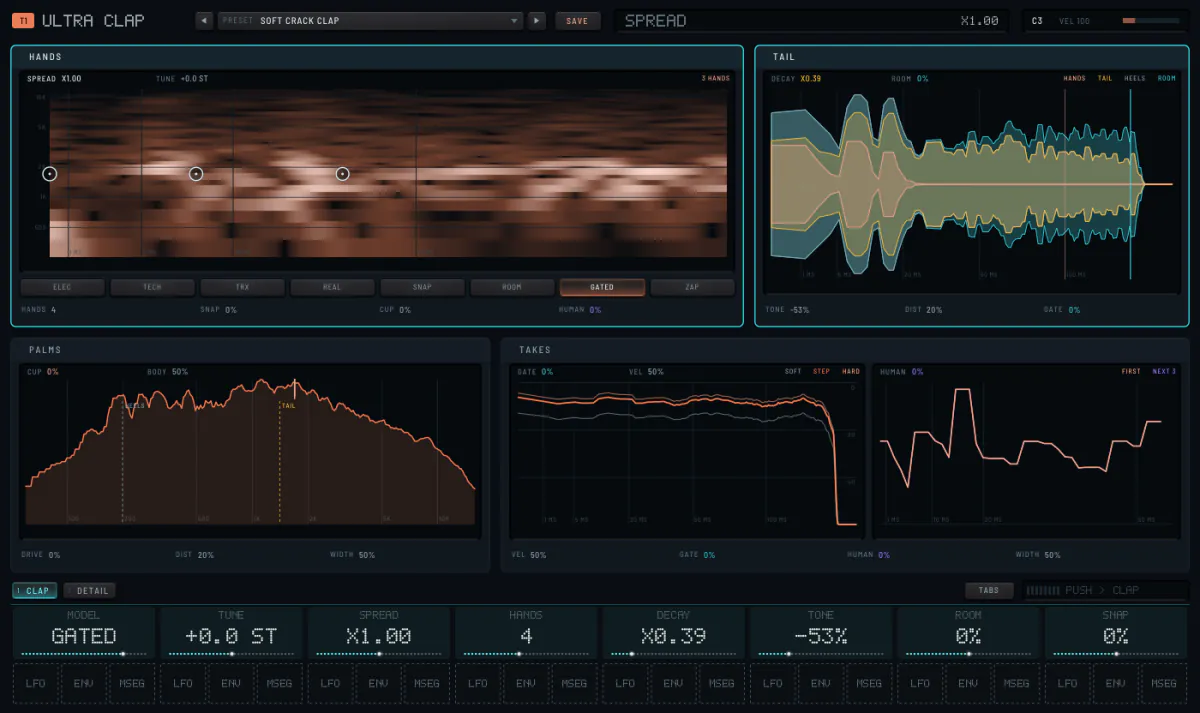
A clap synthesised without recordings: electronic and tech claps, real-hand claps, a snap and a crowd in a hall, each in its own small room.
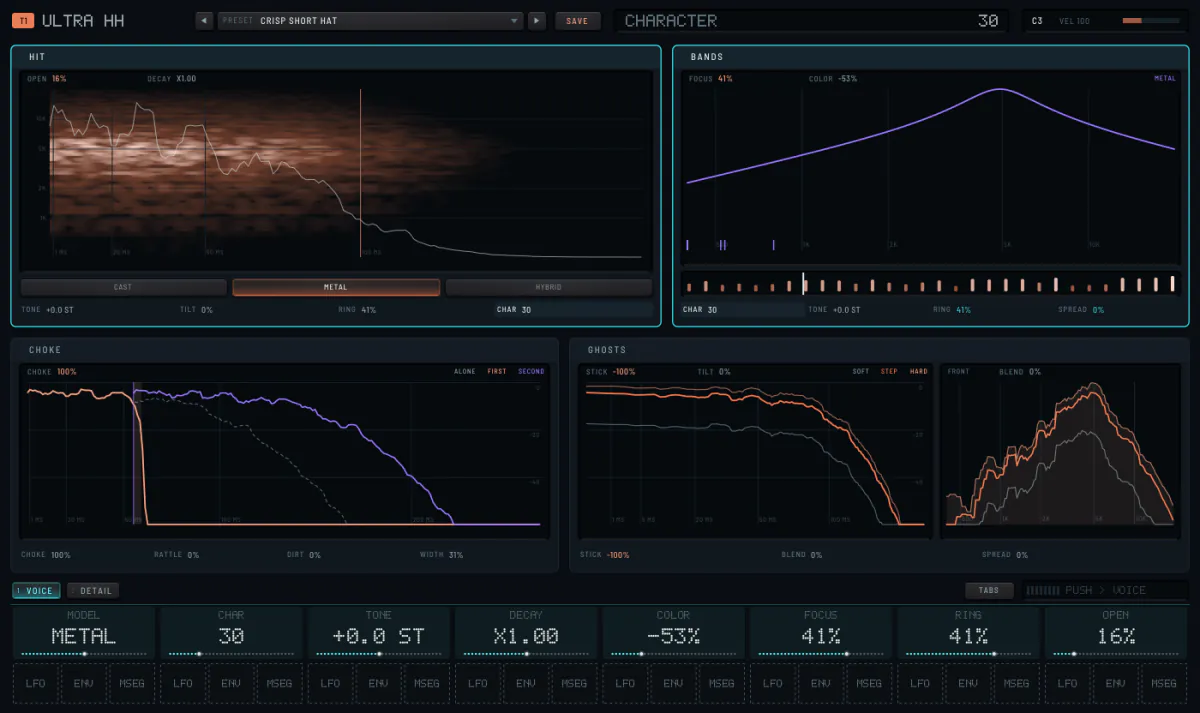
A hi-hat with no recordings: noise through fitted bands and a few rings, a metal bank, or both.
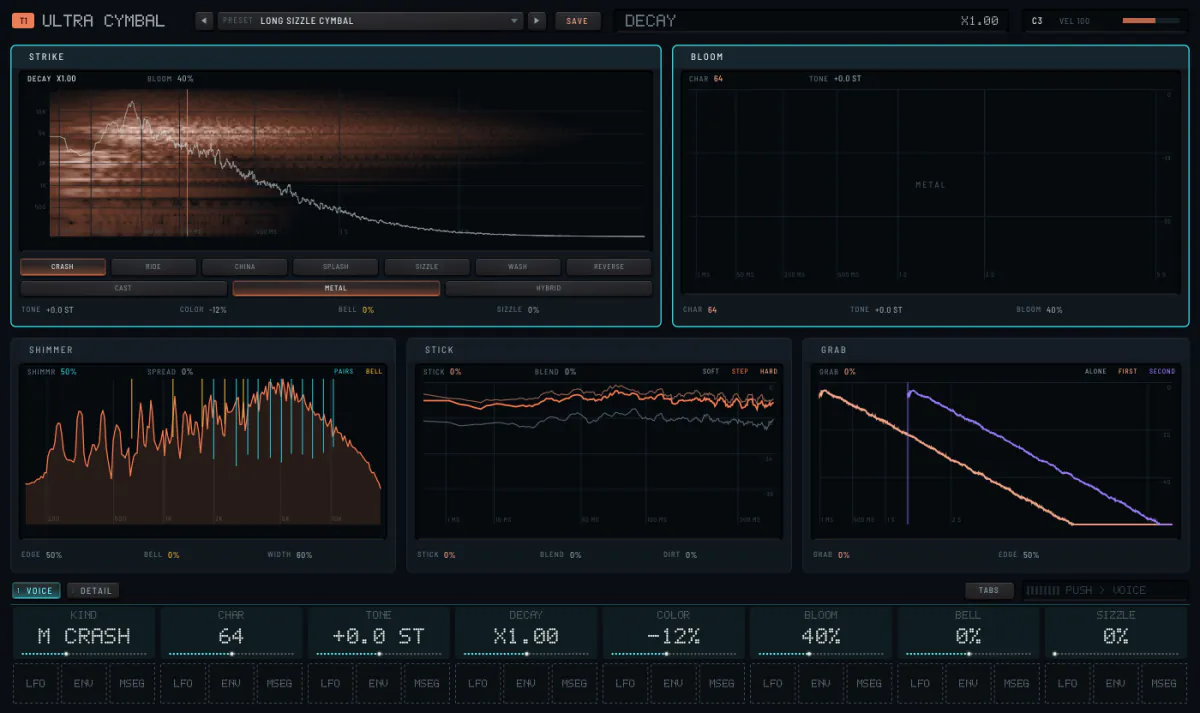
Synthesised crashes, rides, chinas, splashes and sizzles, with washes, a reverse swell and an electronic circuit.
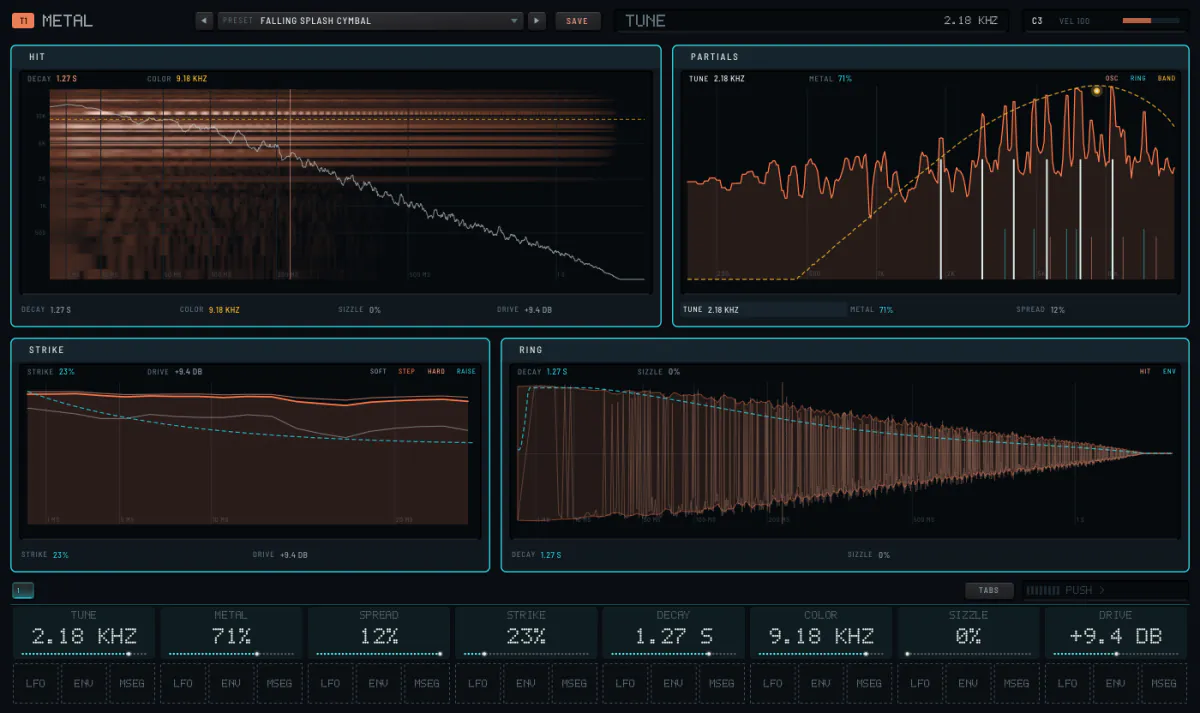
Six square oscillators at inharmonic ratios, ring-modulated and mixed with noise. Hats, bells and metallic kit sounds.
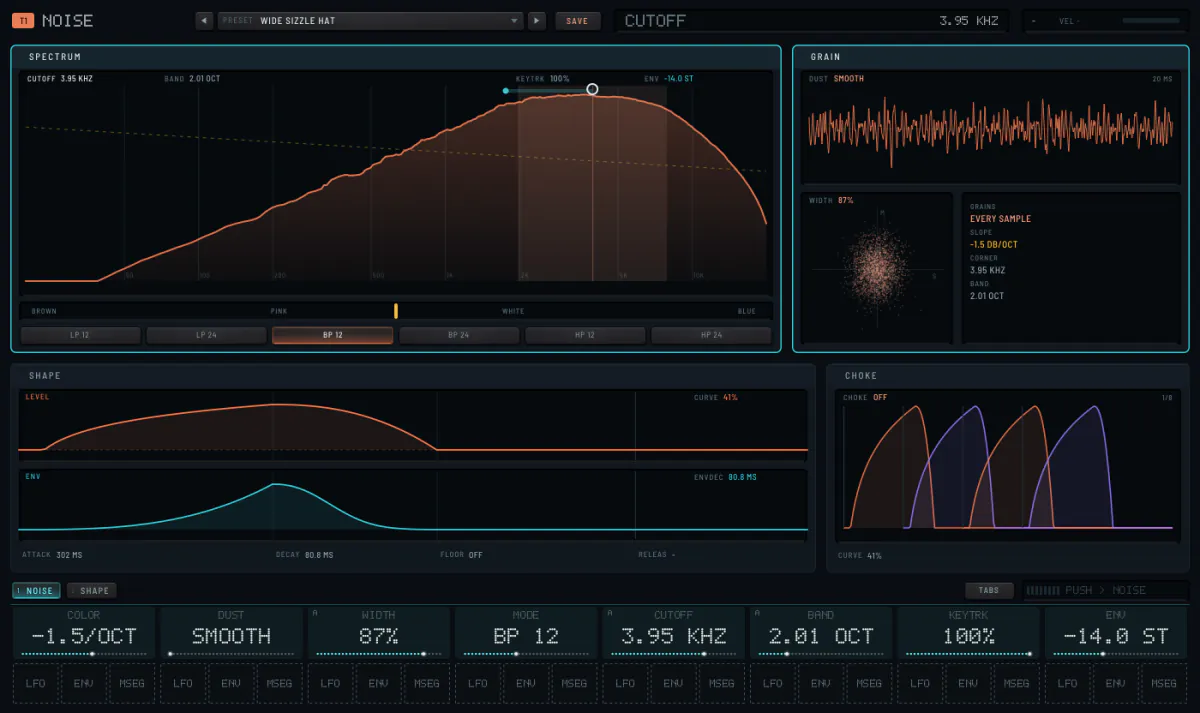
A plain noise source with colour, a filter and a long shaped envelope. A wash, a hiss, a noise hat.
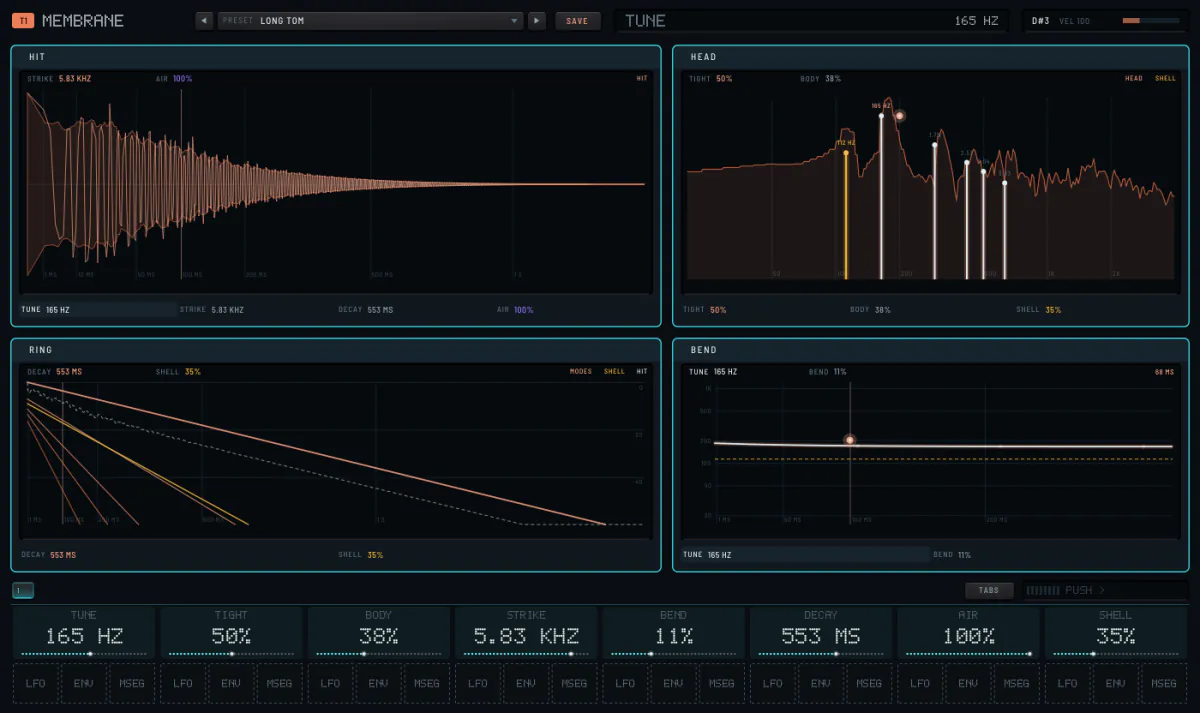
A drum head over a shell: five ringing partials, a lower shell resonance and a contact strike.
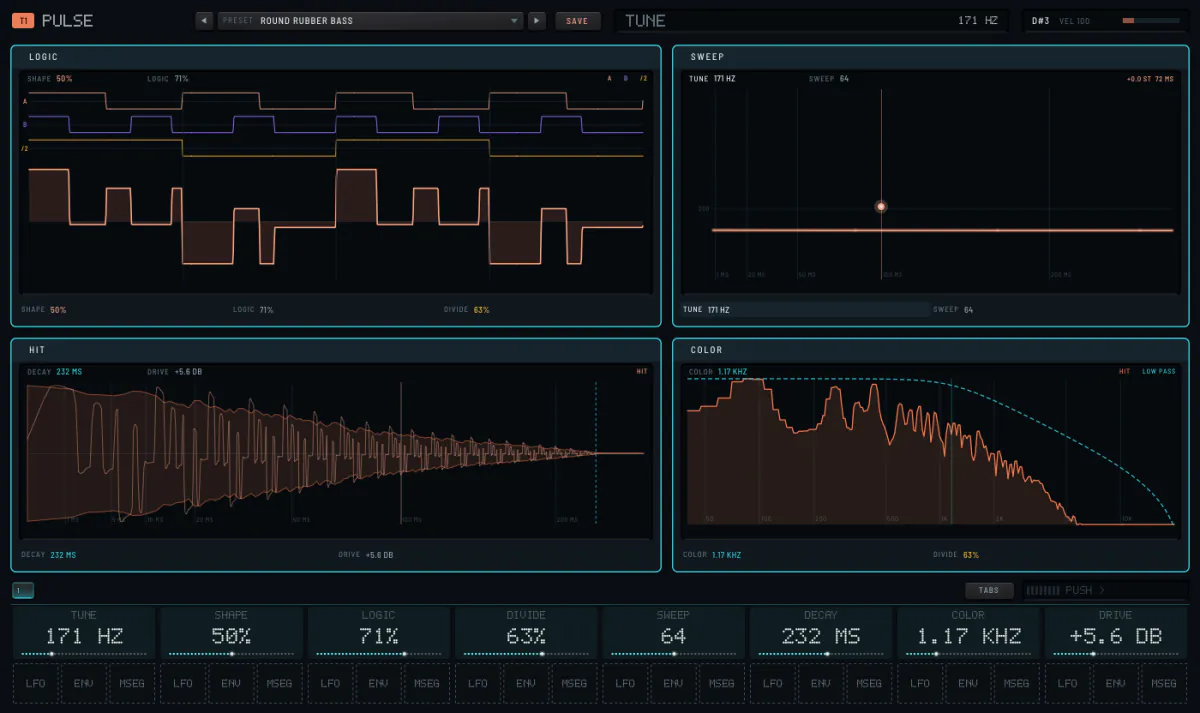
Two pulse oscillators about a fifth apart, summed or multiplied, with a divider an octave below. Used for percussion.
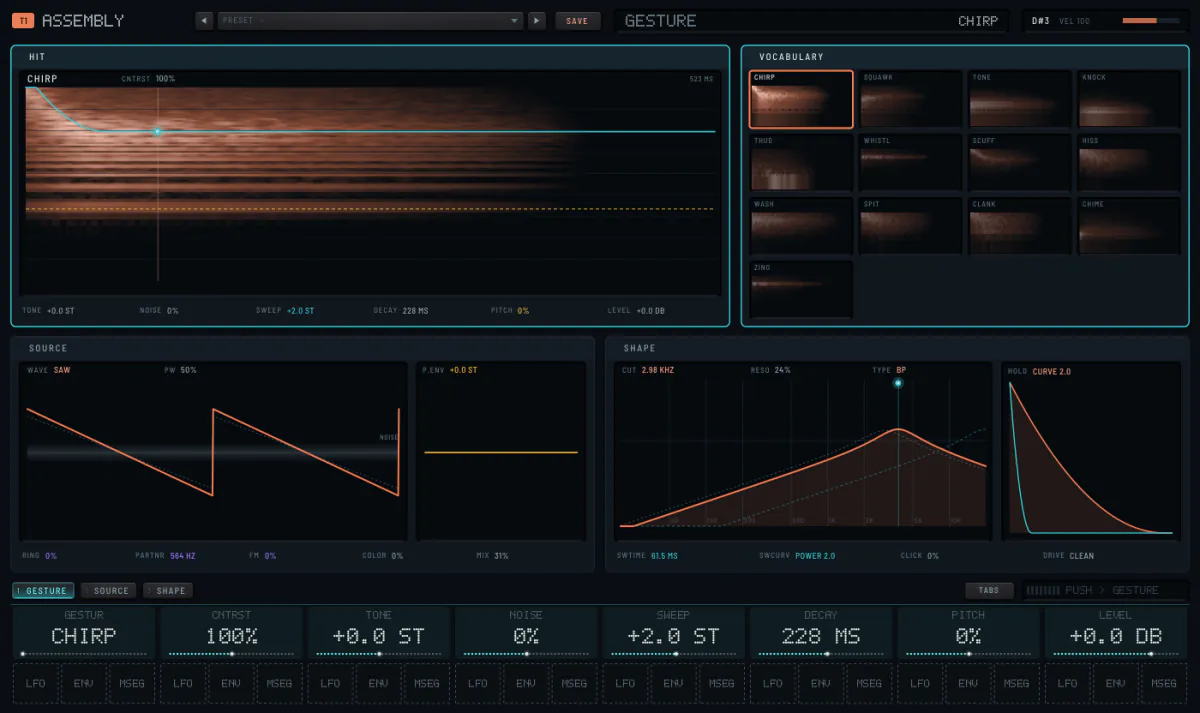
One voice with another sound on every step. Gestures on a knob turn a single machine into a kit.
Six small voices behind one MODEL knob: an FM snare and tom, a struck snare and tom, a saw tone and a pulse tone.
A shaker's hand played by synth voices. Every stroke is a different sound: FM, additive, subtractive or a struck object.
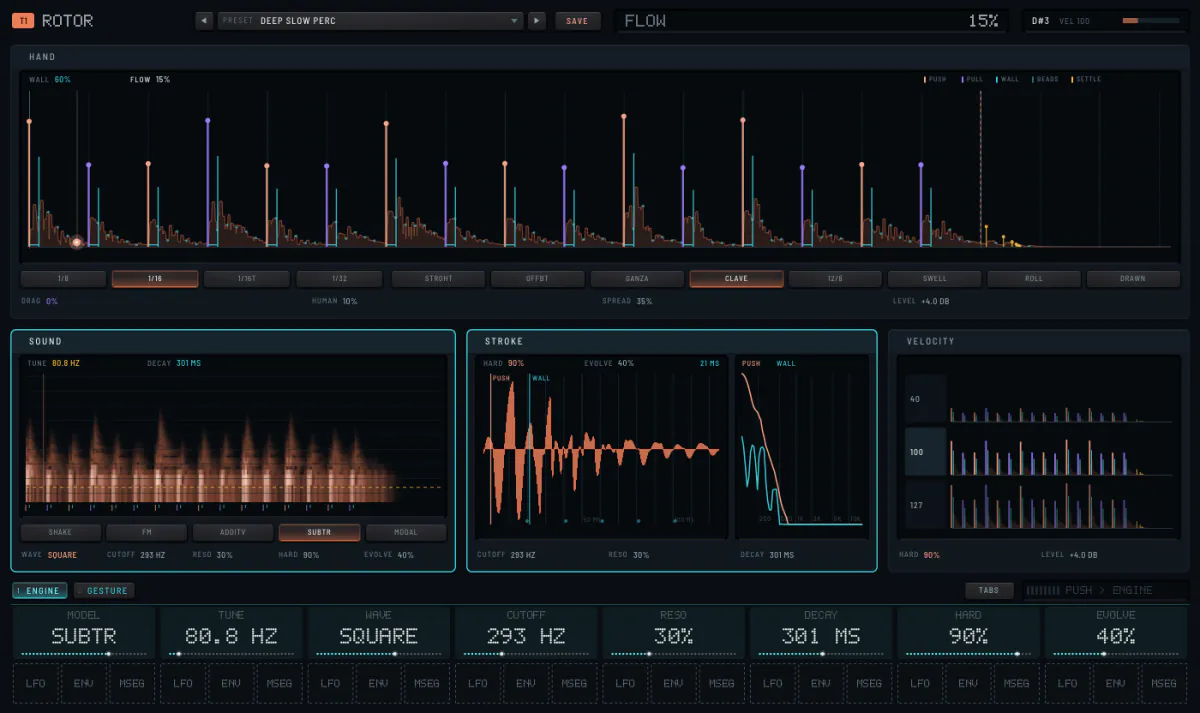
One trig drops an object that bounces in time and lands on the grid. Six engines play the bounces, each darker, purer and looser than the last.
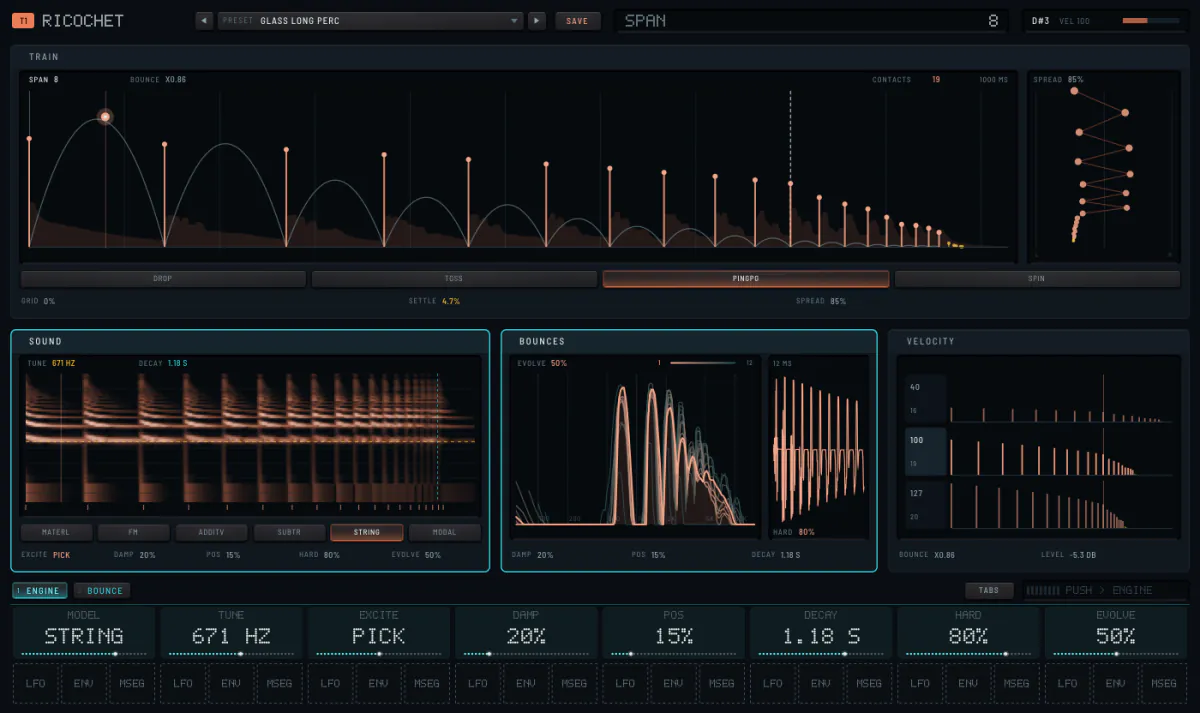
A kick sent into a long dark reverb and ducked by its own hit, so the reverb swells between the beats. GROOVE adds body, swing and grit.
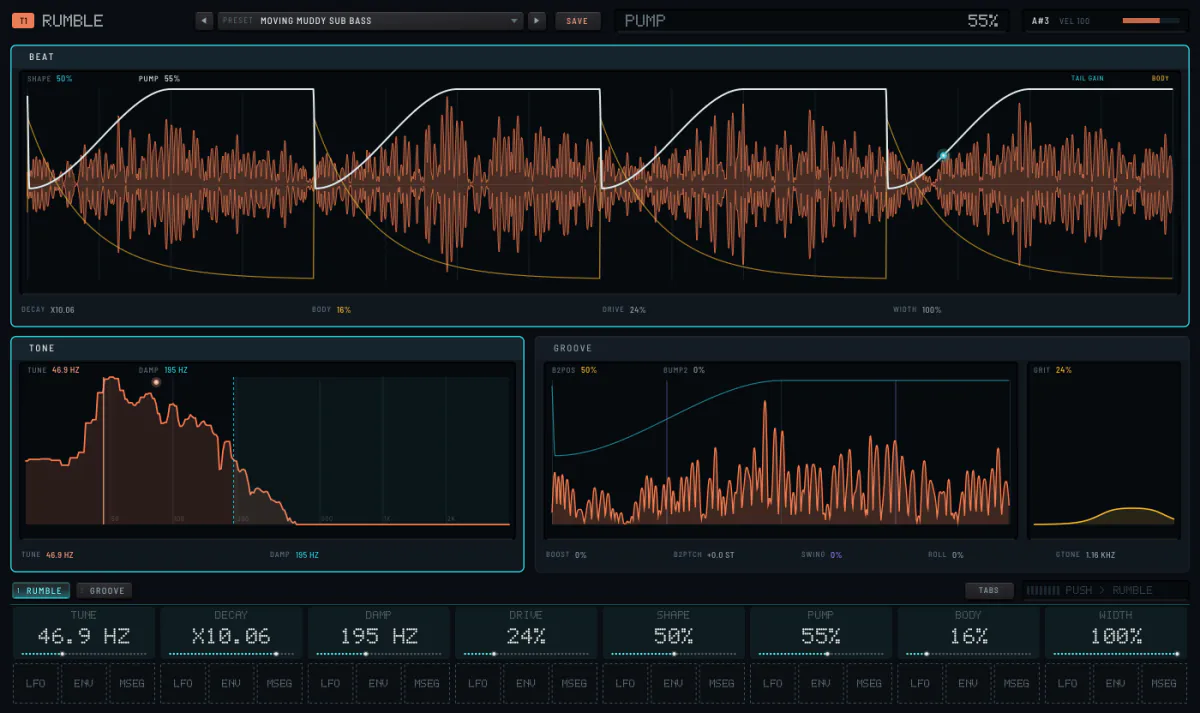
A deep mono bass: up to four stacked oscillators and a locked sub into a driven transistor ladder, with an envelope each for level and filter.
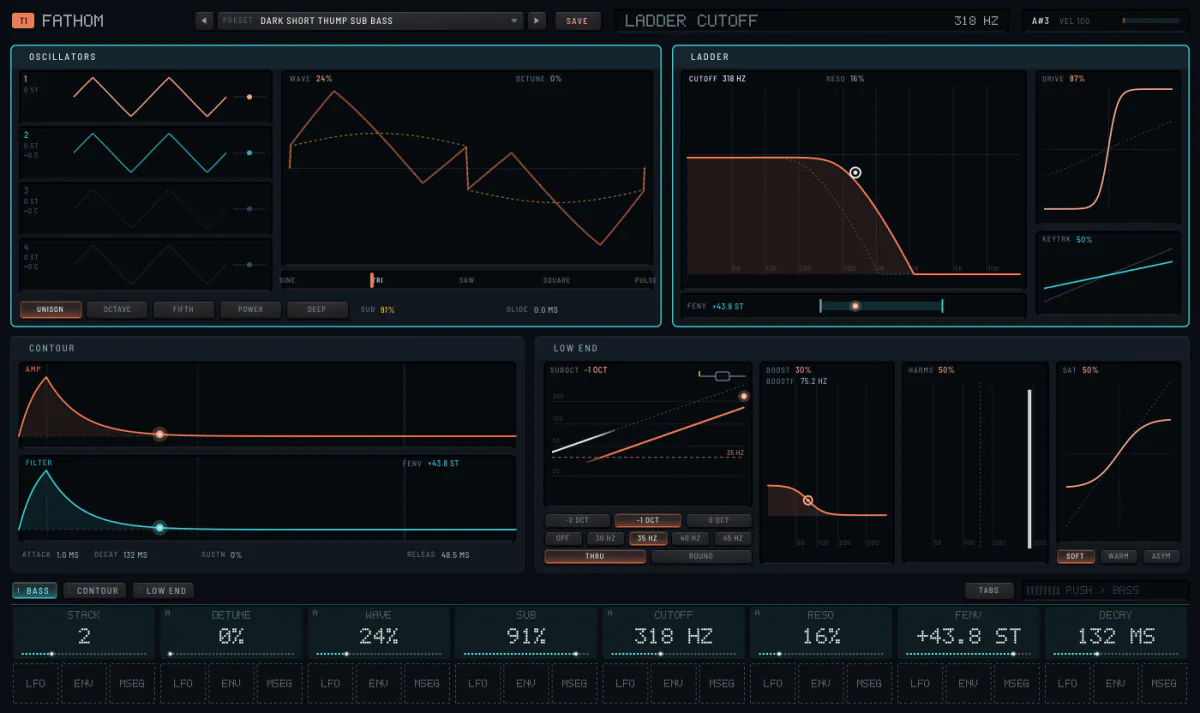
A bass built from up to 256 sine partials, with no filter. The tone is set by the partials.
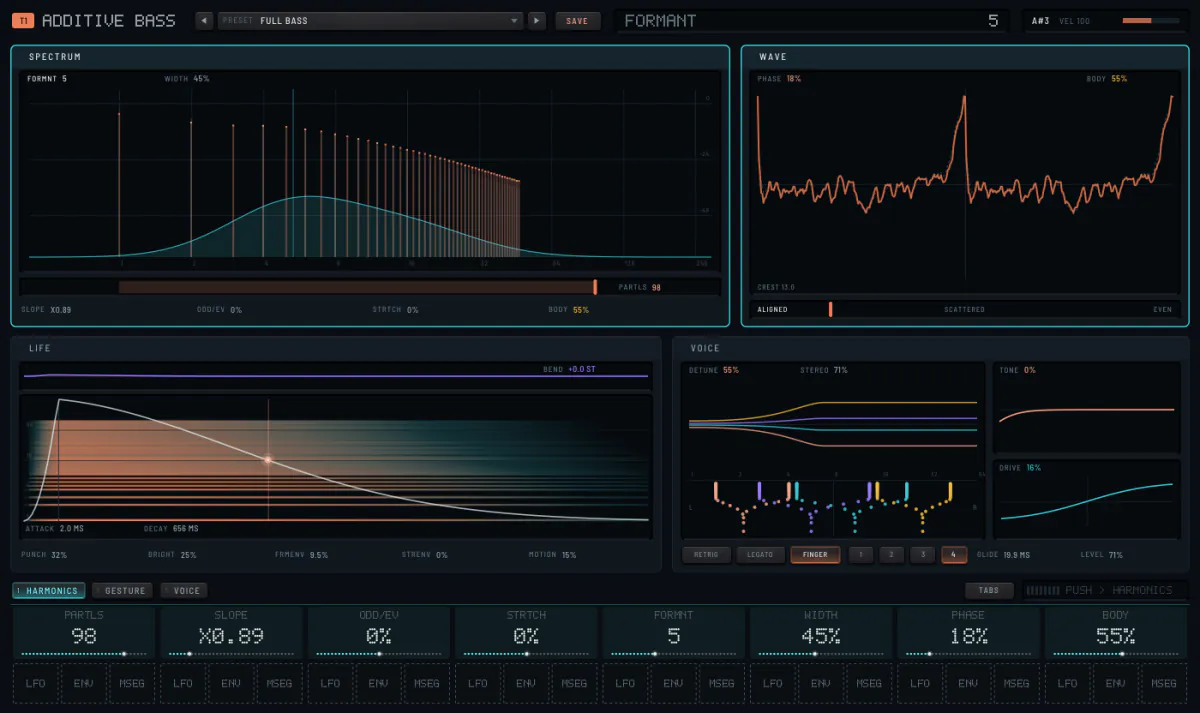
A bass whose oscillators are moved by a strange attractor.
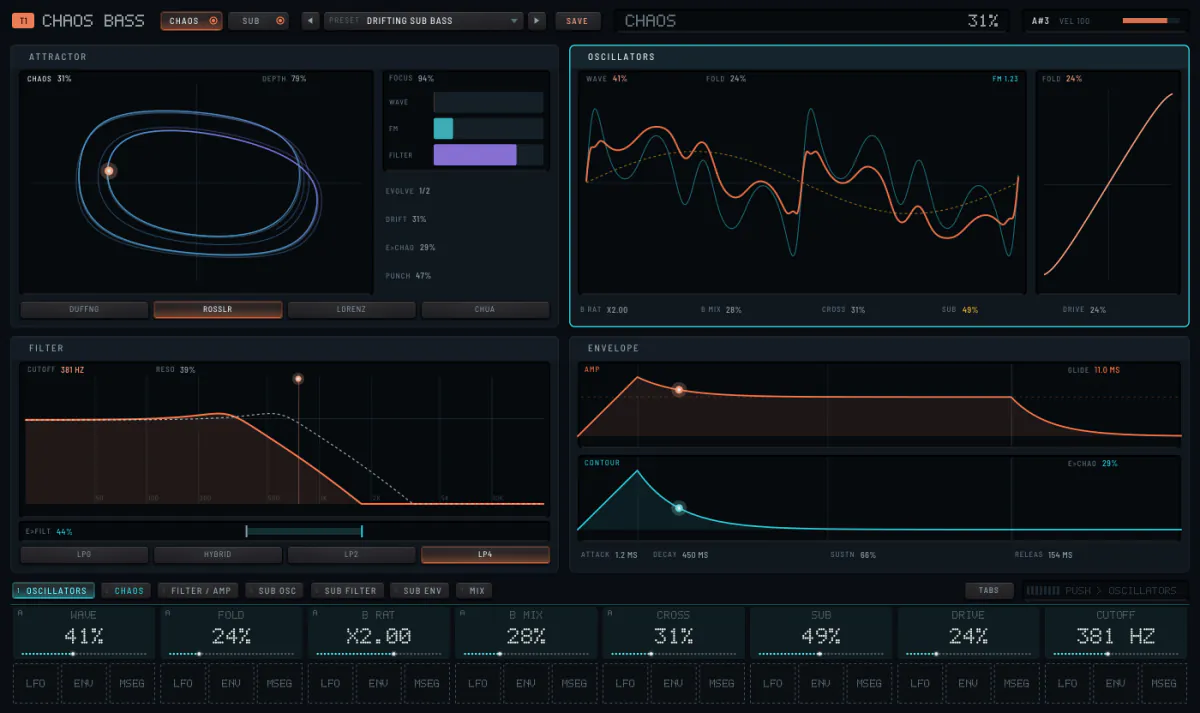
Detuned saws beating at a rate you set and torn by a phaser, or an FM growl talking through moving vowels, over a clean sub.
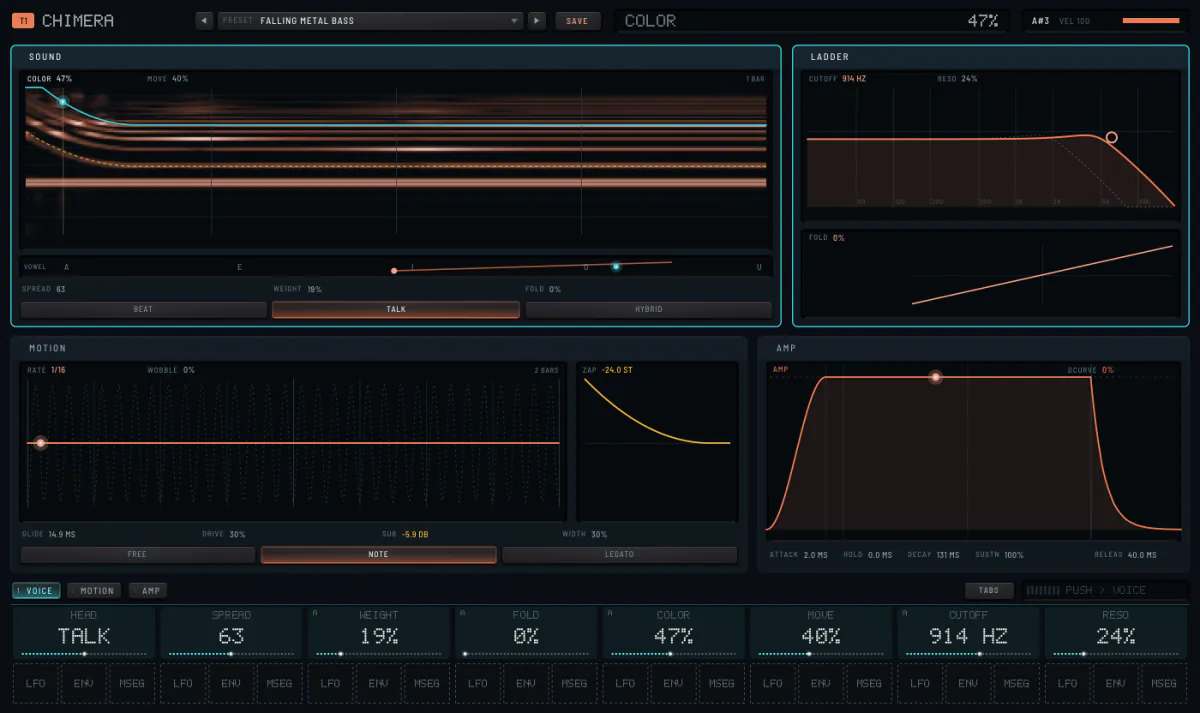
A rolling bass line from one trig: rolls that keep out of the kick's slot, with accent, cutoff and jump lanes, BUILD and FILL.
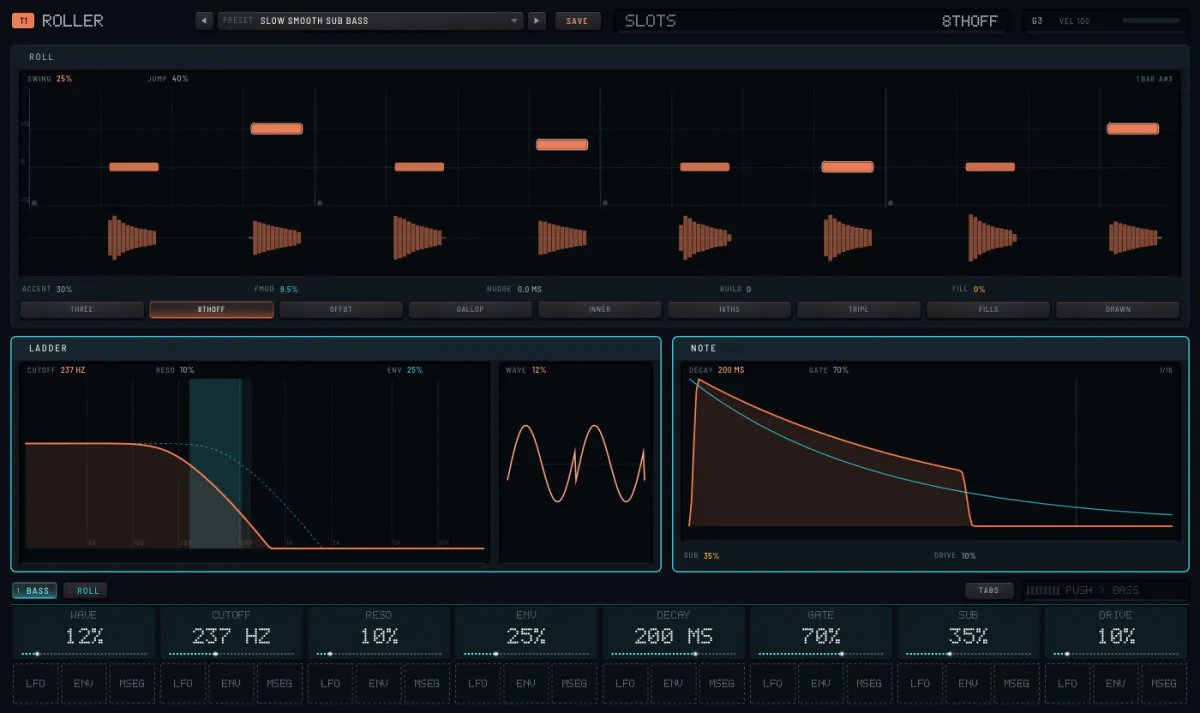
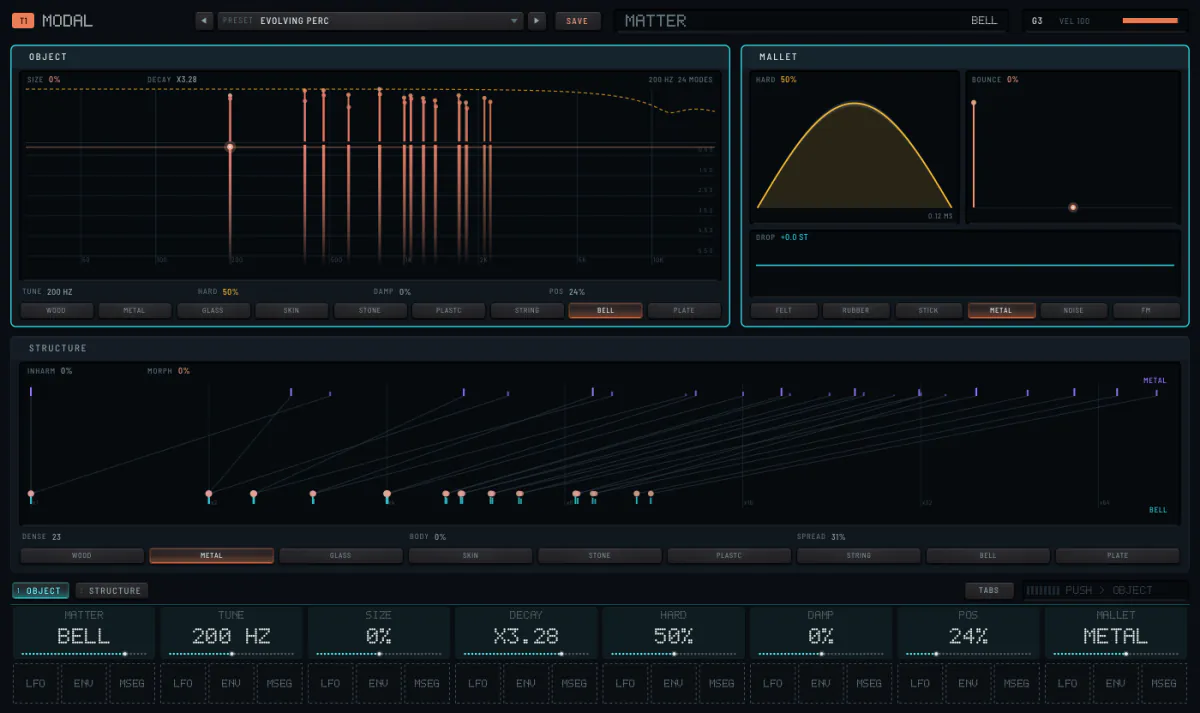
A struck object chosen by its material, wood to bell, morphed into a second. Mallet, position, damping and body.
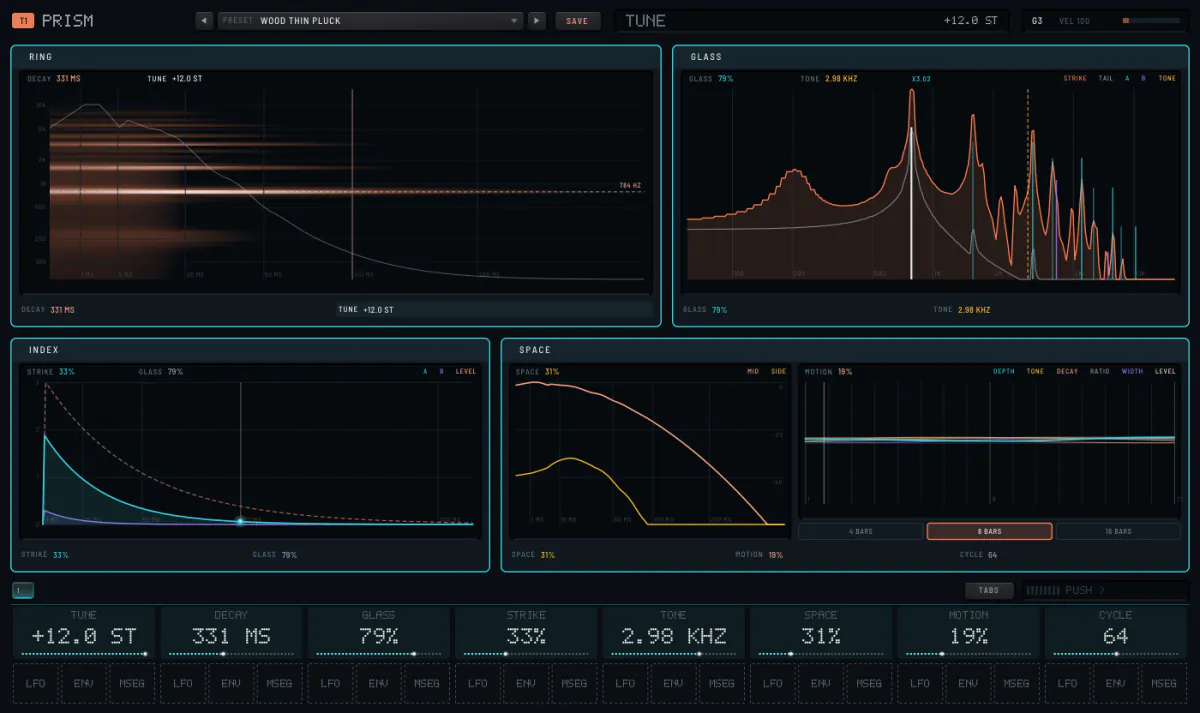
A glass bell: a sine phase-modulated by two brief bursts that die away and leave a plain tone.
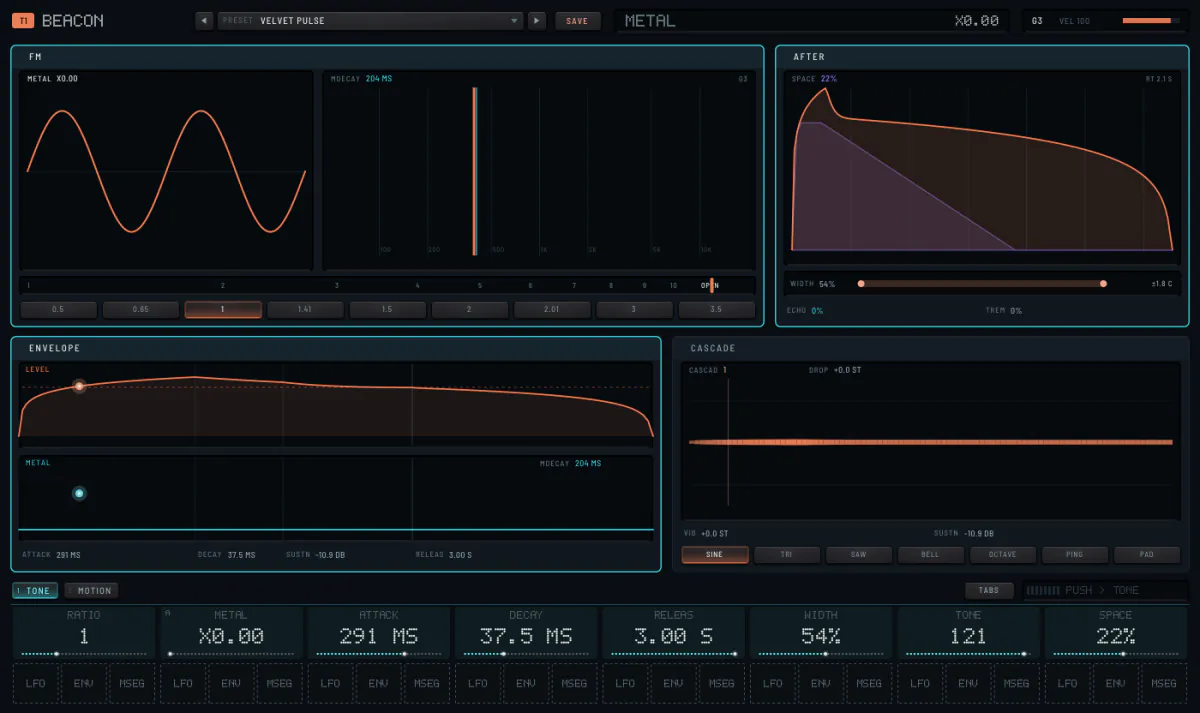
Metallic FM pings, held tones, pads and falling cascades, with a tempo echo and a room.
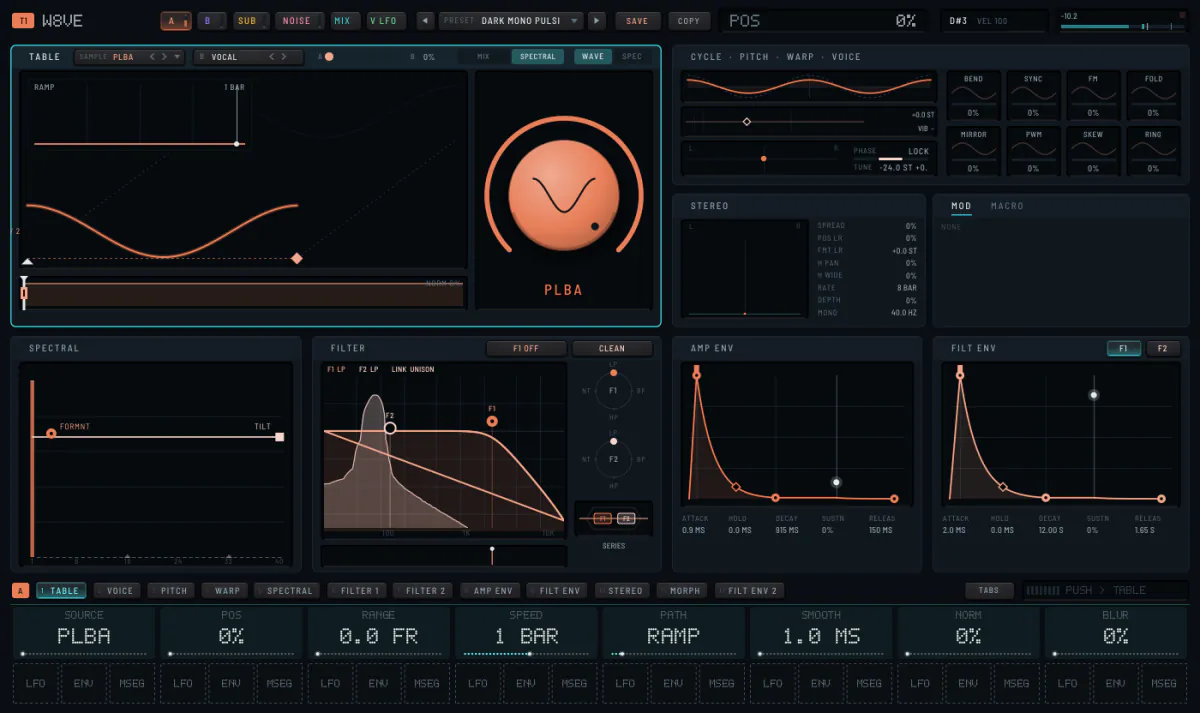
A wavetable synthesiser with sixteen table families, tables from the pool, a scan and a MACRO panel.
A struck, scanned wavecycle through two level-keyed gates.
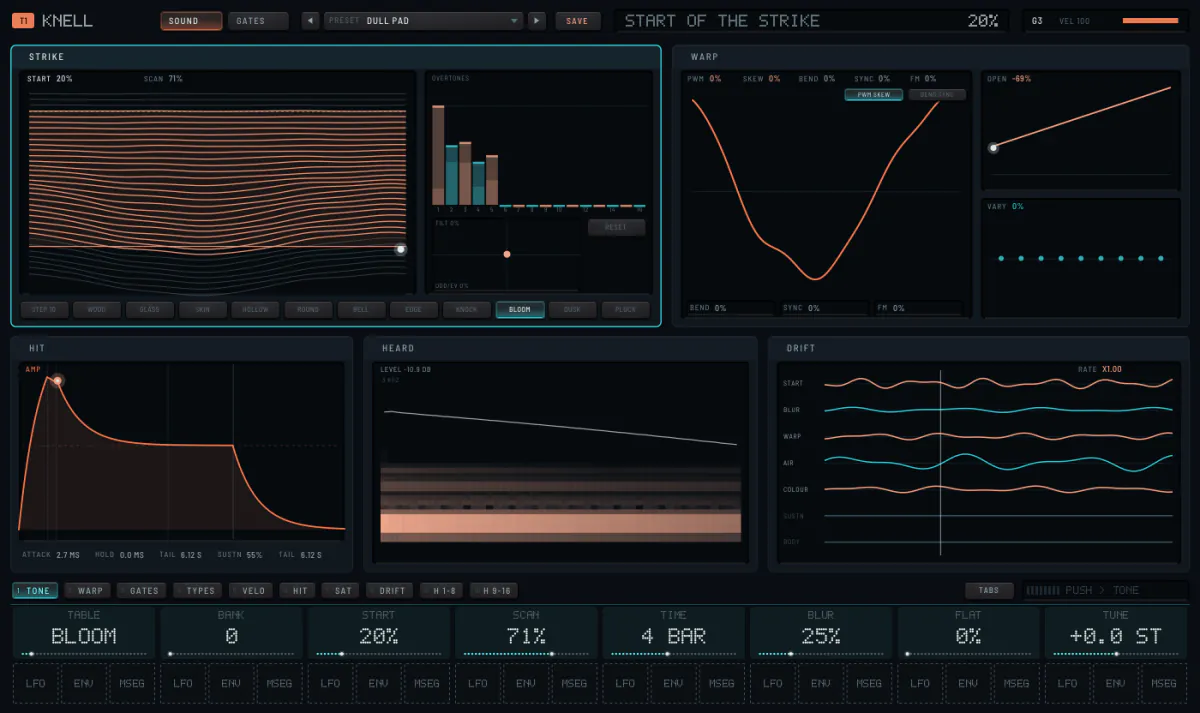
Three operators in five arrangements, with the index and pitch on their own envelopes: bells, metal, wood, toms, stabs, basses and keys.
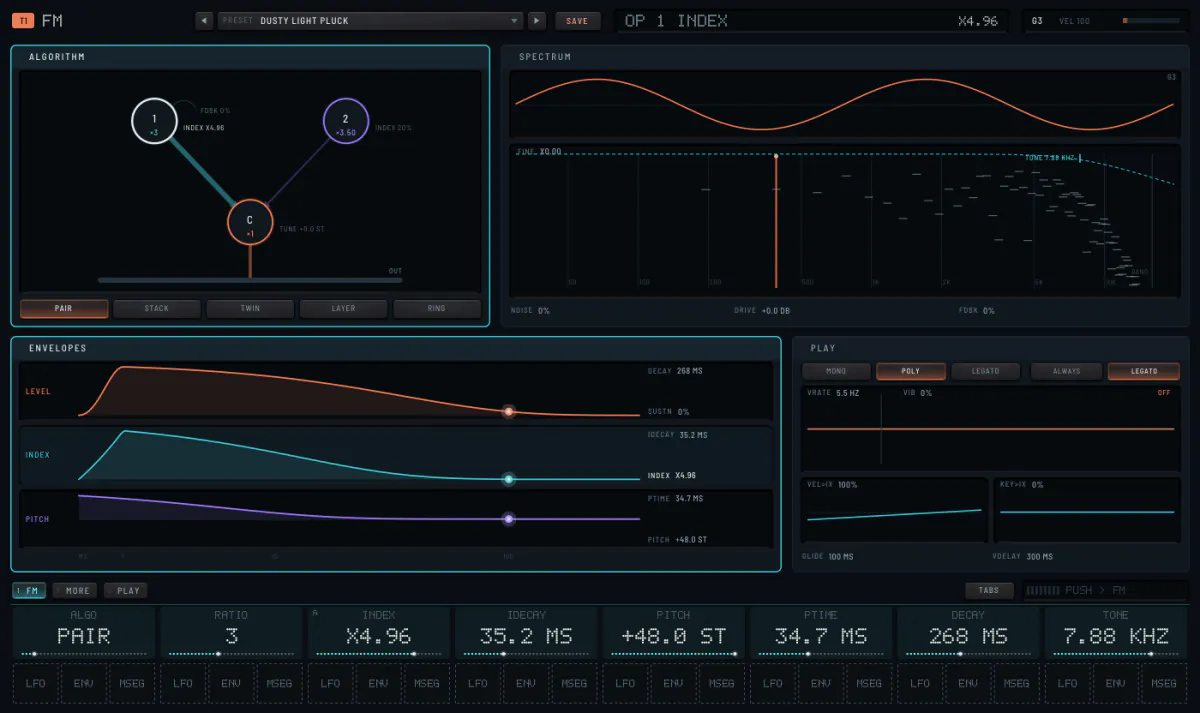
A squelching bass synth: a saw and a pulse through two band-pass formants that sweep in opposite directions.
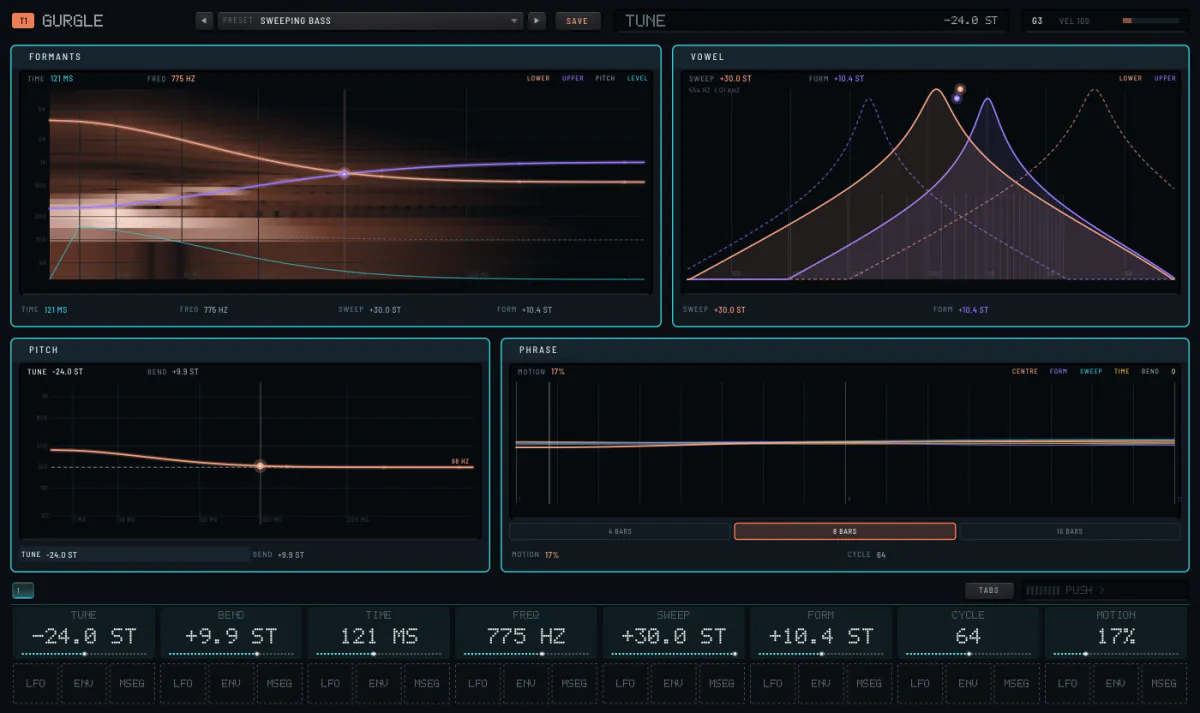
A short two-part chirp, lower and shorter than GURGLE.
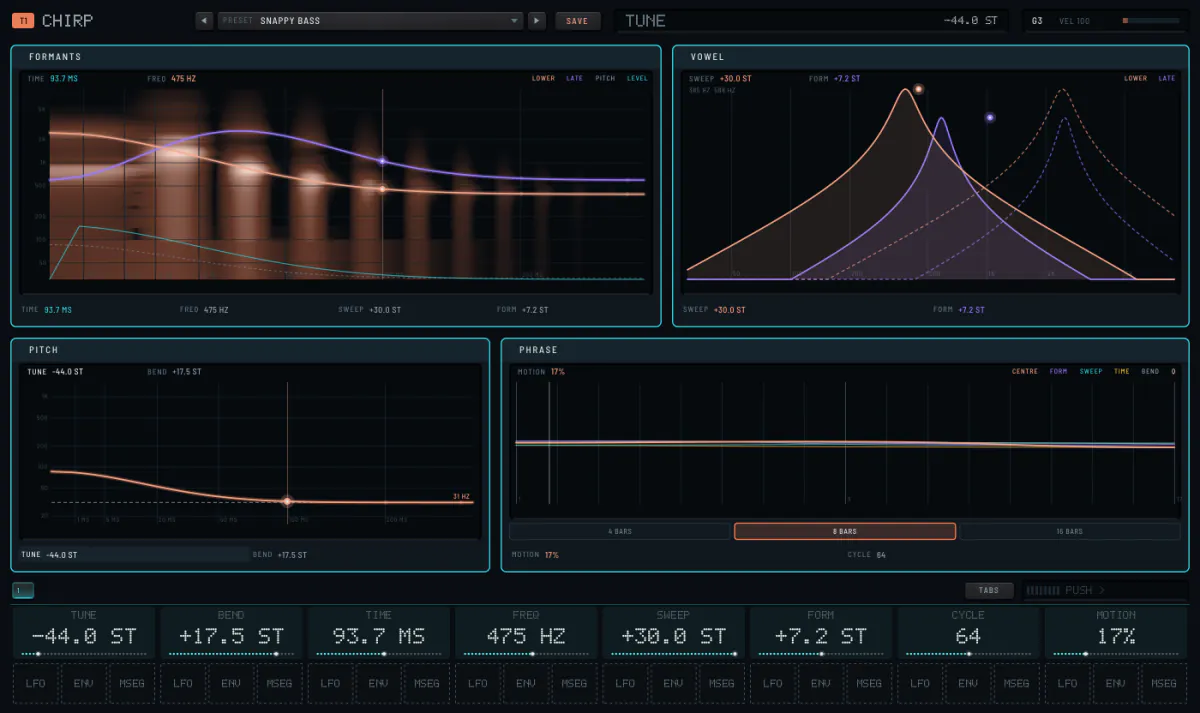
A growling variant of GURGLE: the same tuning and timing with a narrow pulse source and tighter formants.
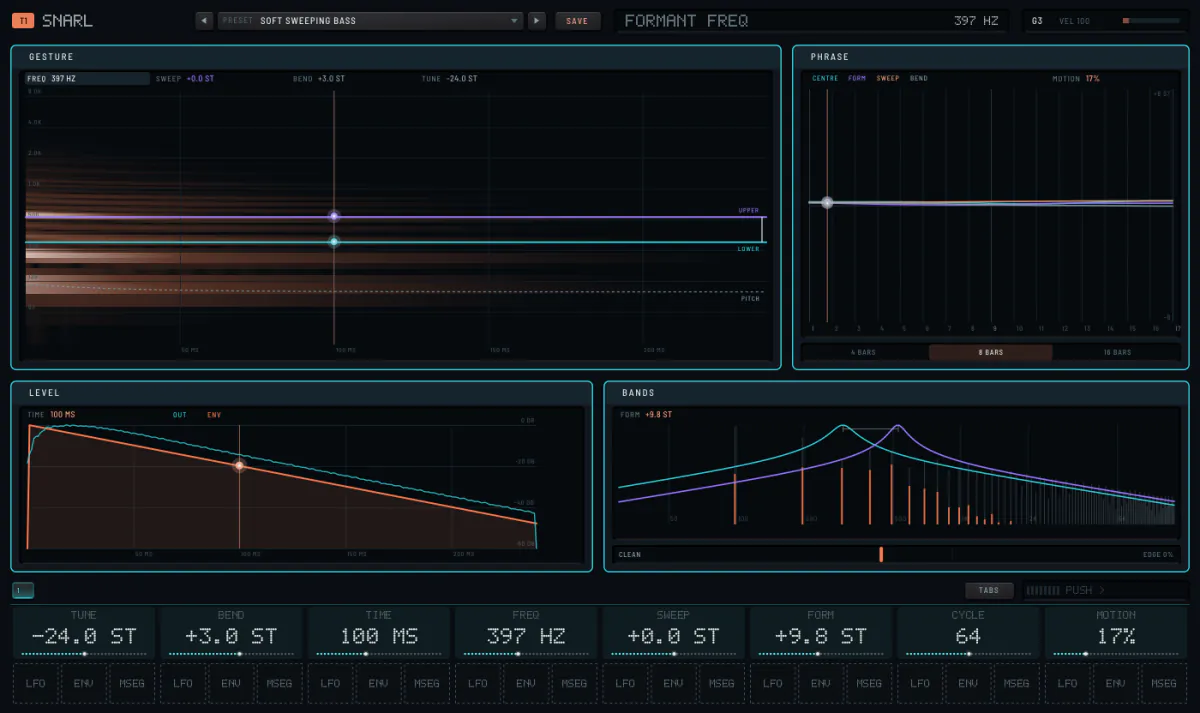
Zaps, ice pings, lasers and risers. Every event is its own swept filter, all at one loudness, echoed in time.
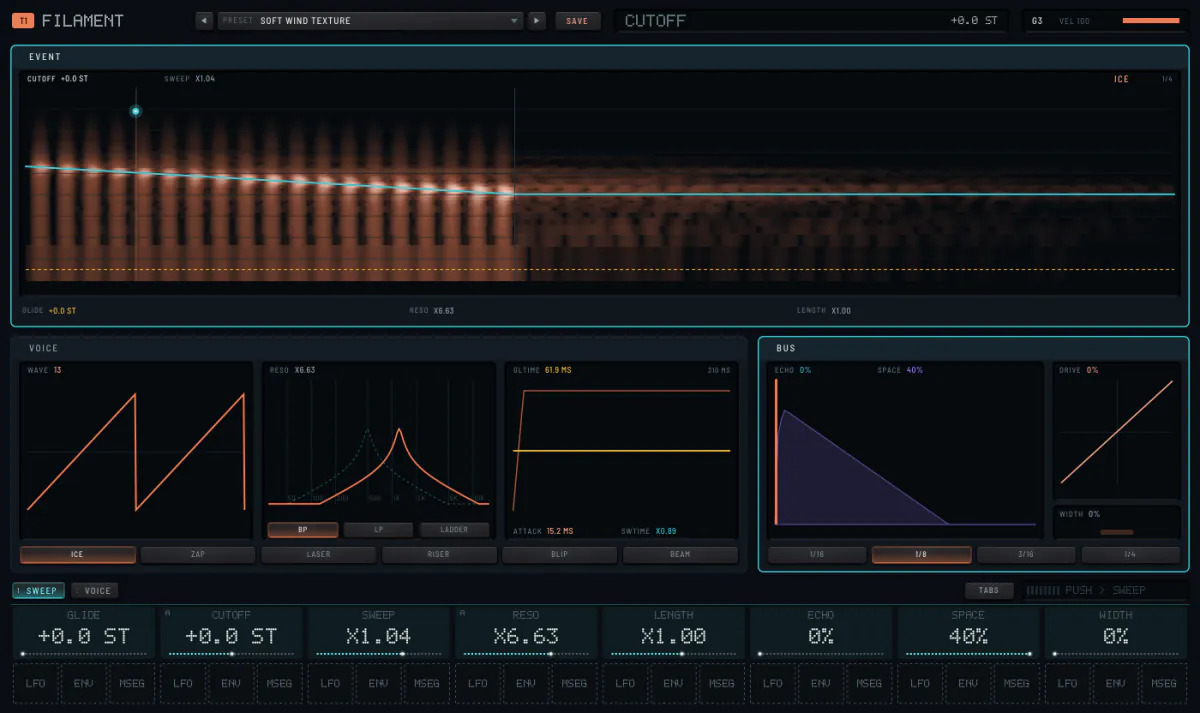
Four resonators pinged by a pulse and swept by every hit, with a tuned loop that always dies away.
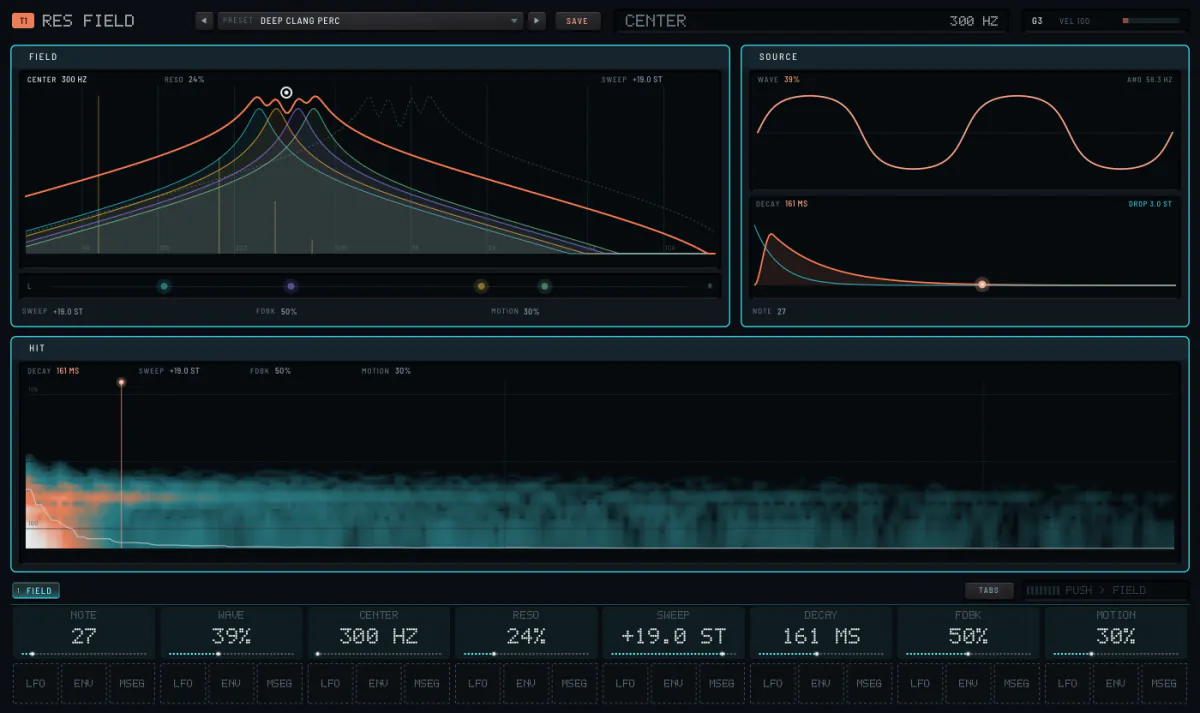
A chord stab of three to five notes on the played note, through a filter that opens at the hit and closes again.
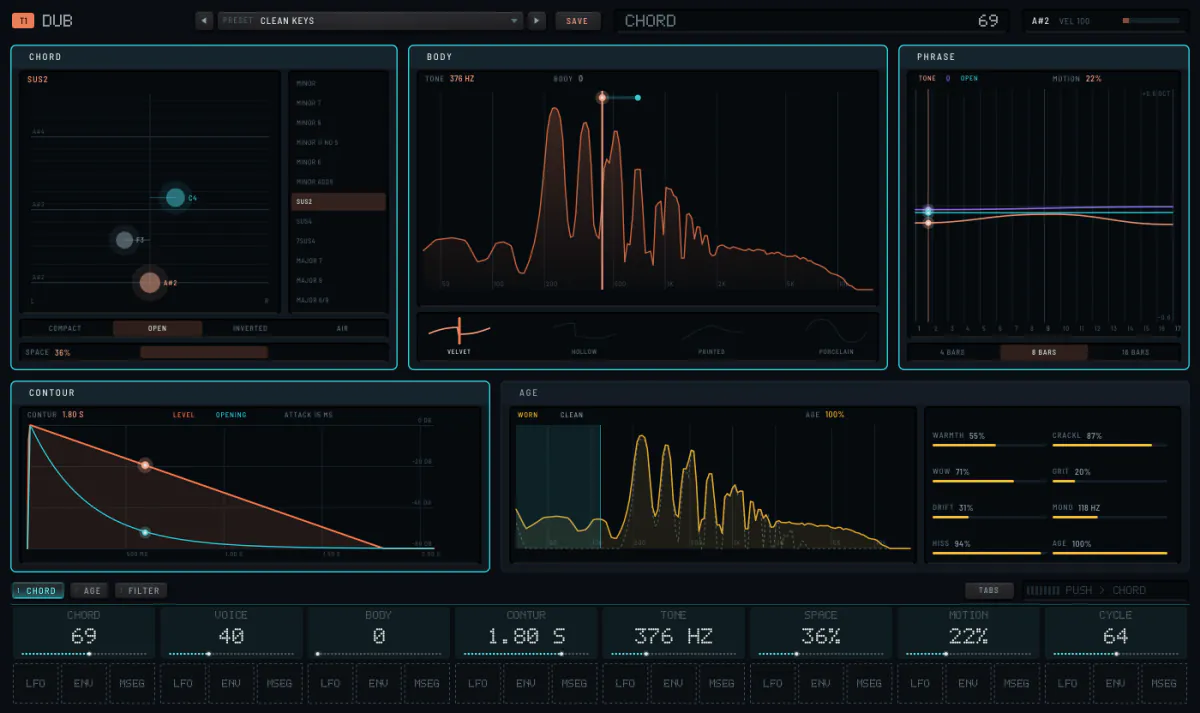
A held chord, gated and sequenced: a fast gate, an offbeat organ or a sidechain pad, locked to the bar.
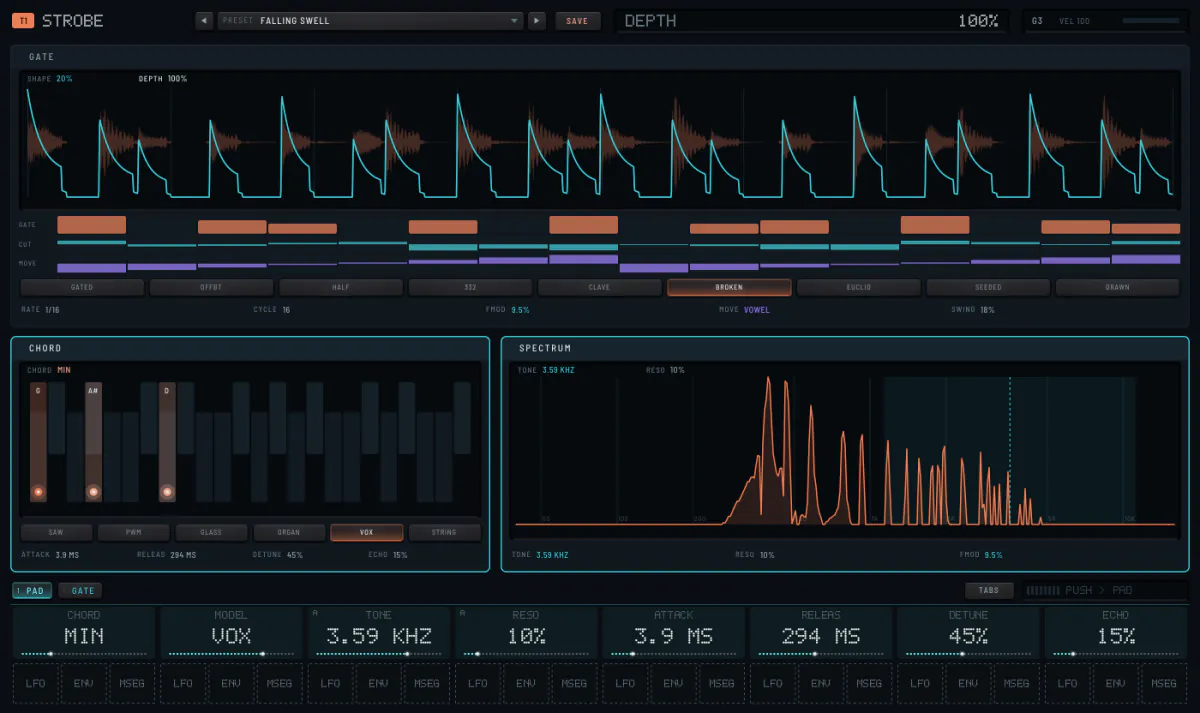
A chord and pad synth. One key plays a whole chord, in six textures, with unison, binaural stereo and a real ADSR.
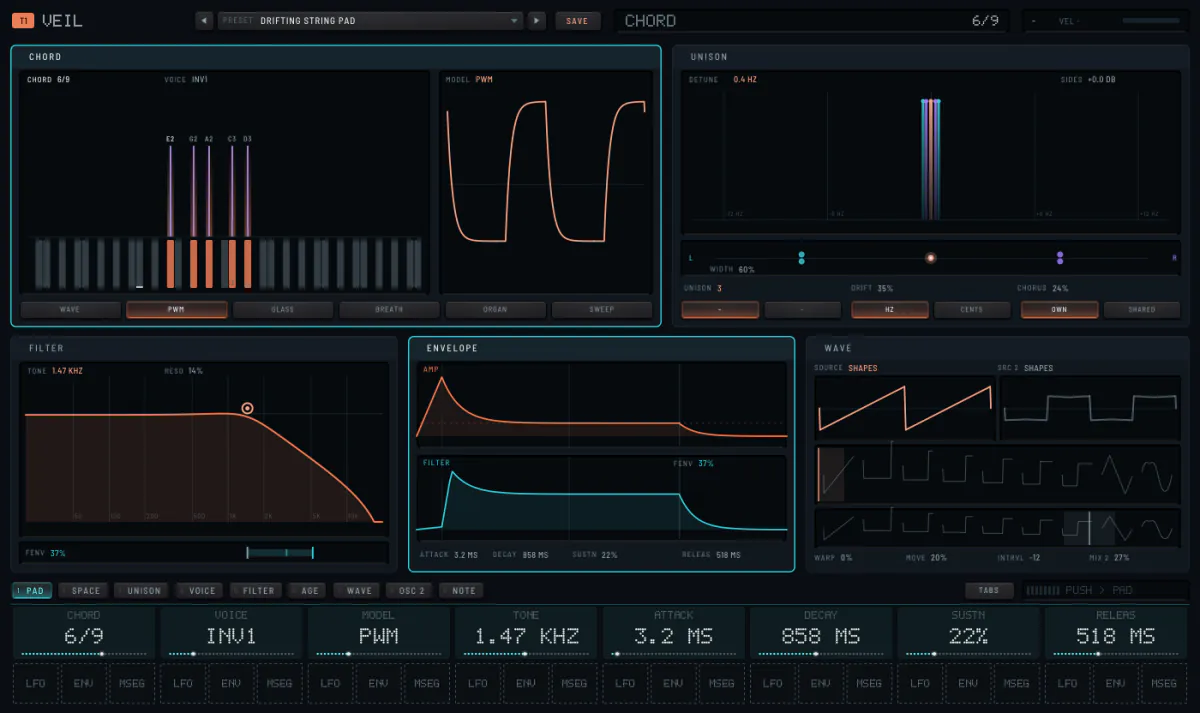
An ensemble synth for chords: a supersaw, moving pulses, drawn or struck harmonics, with a string-machine chorus and bar-locked motion.
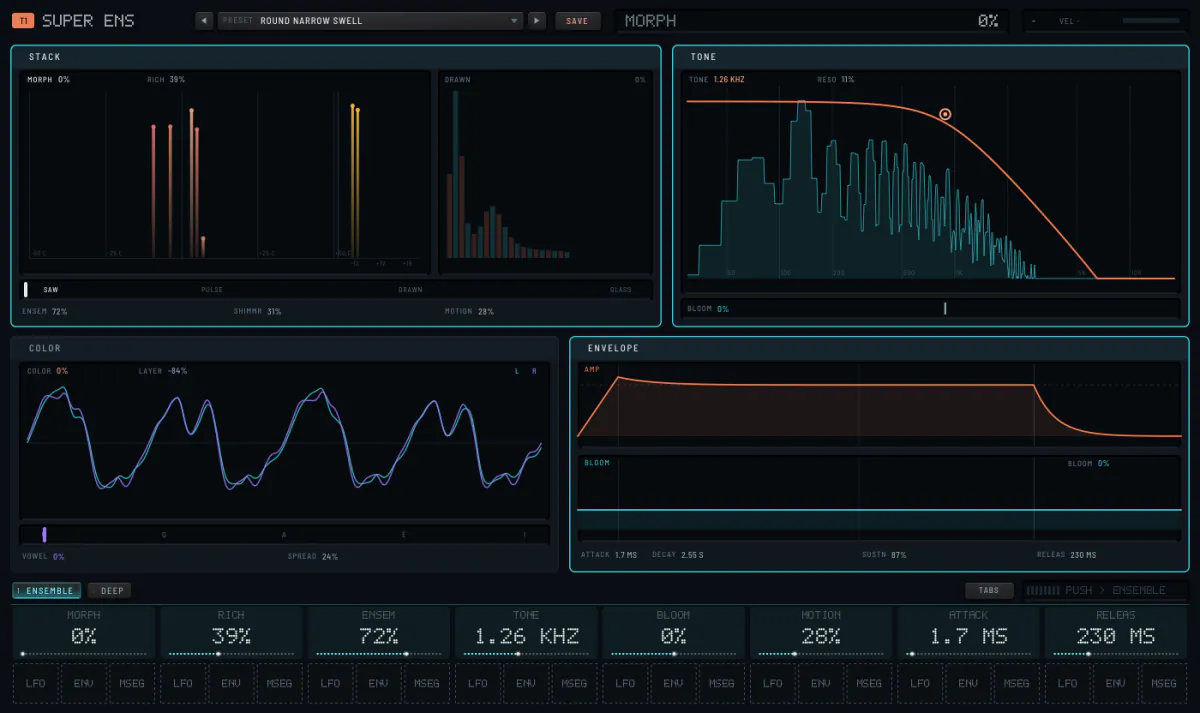
A polysynth of up to twenty-four notes, each of them two instruments, one in each ear.
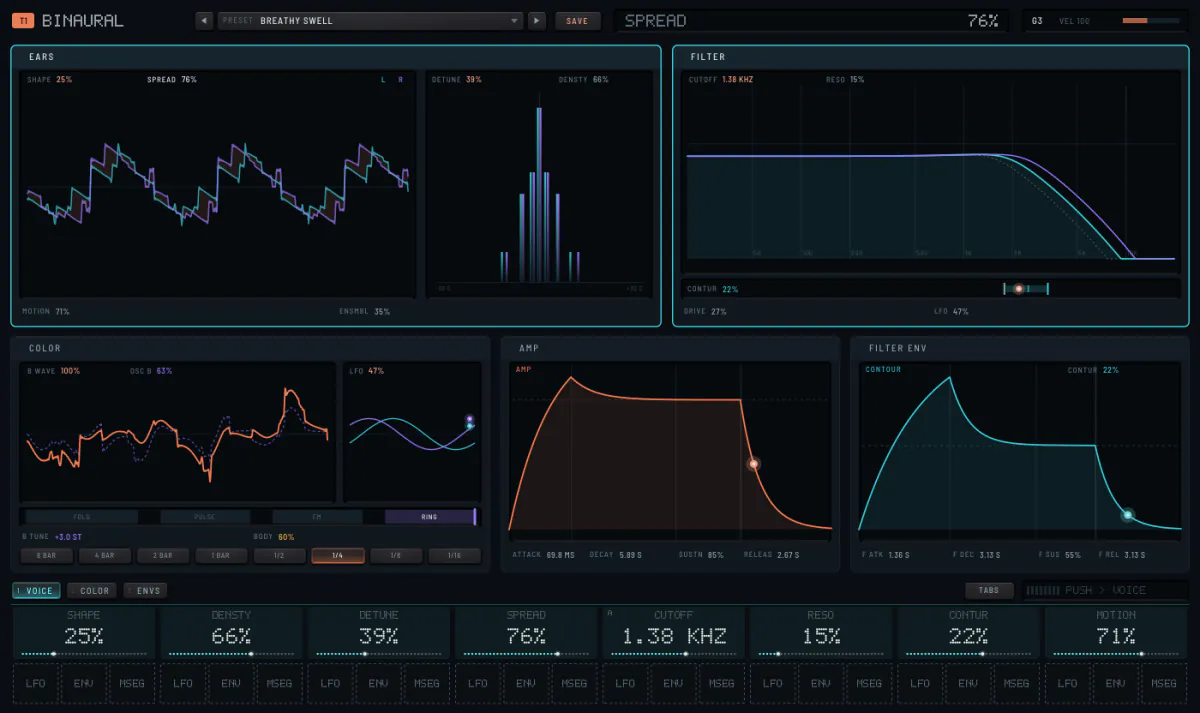
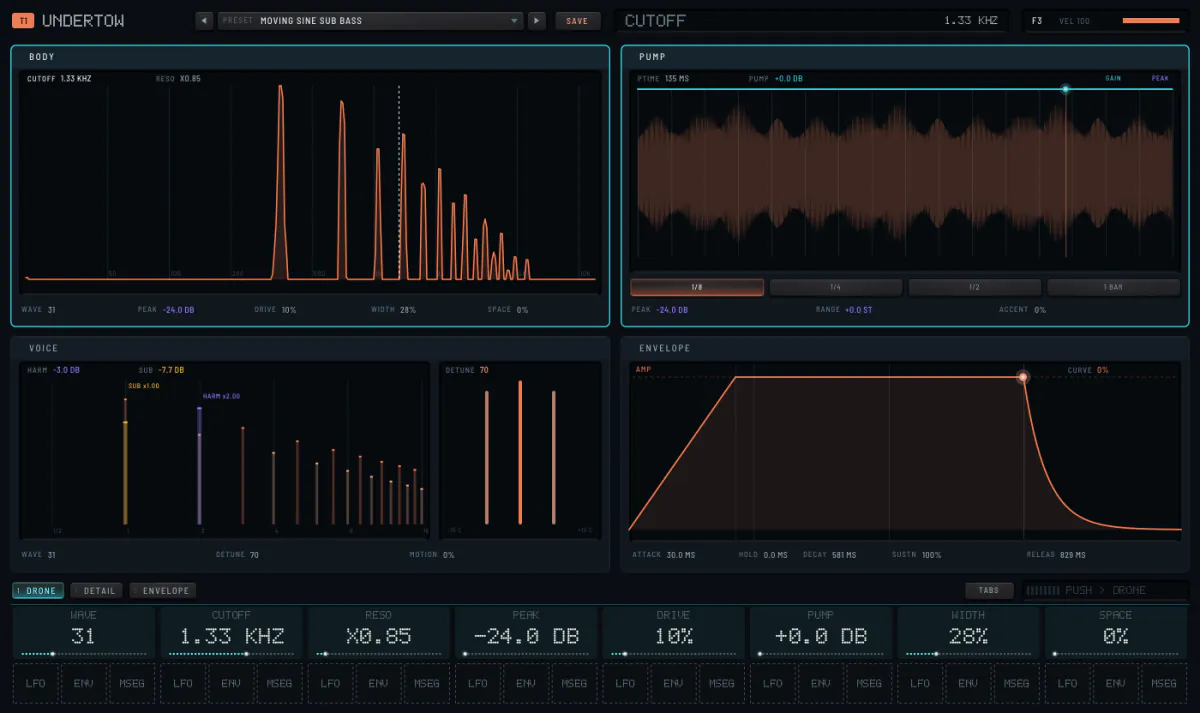
A held drone: saw to pulse, a moving resonance peak, a pump locked to the beat, and a sub two octaves down.
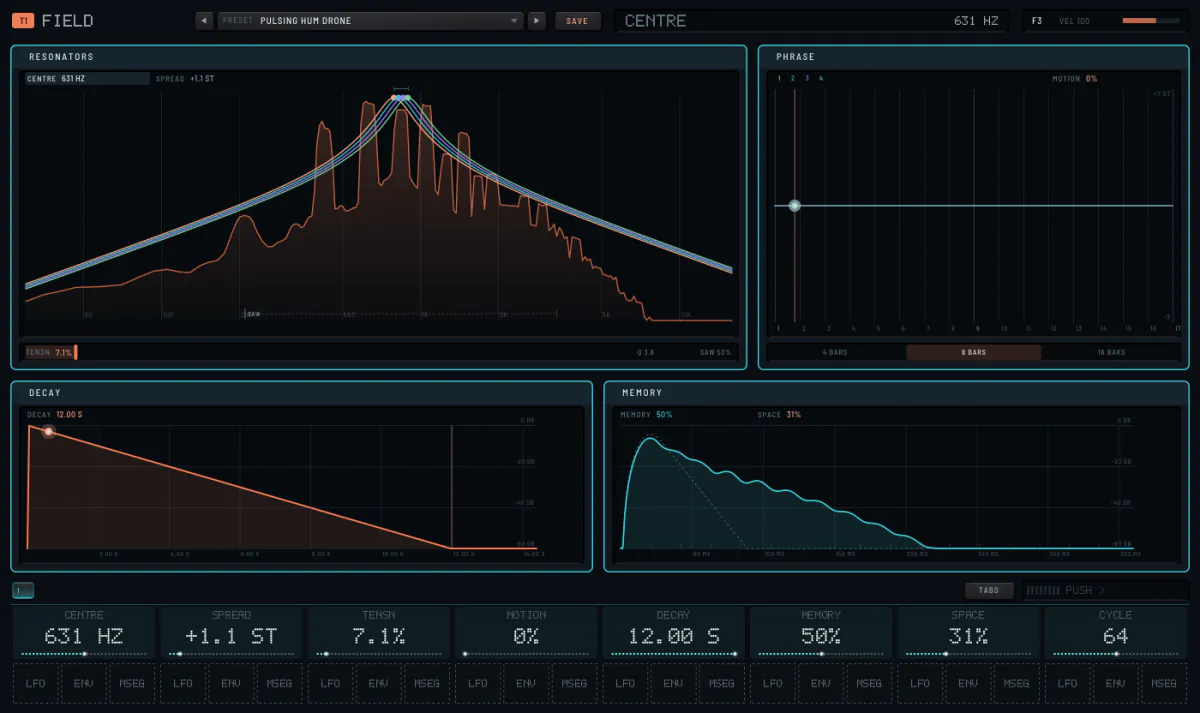
A sustained resonant tone: a saw, a sine and some noise through four linked filters.
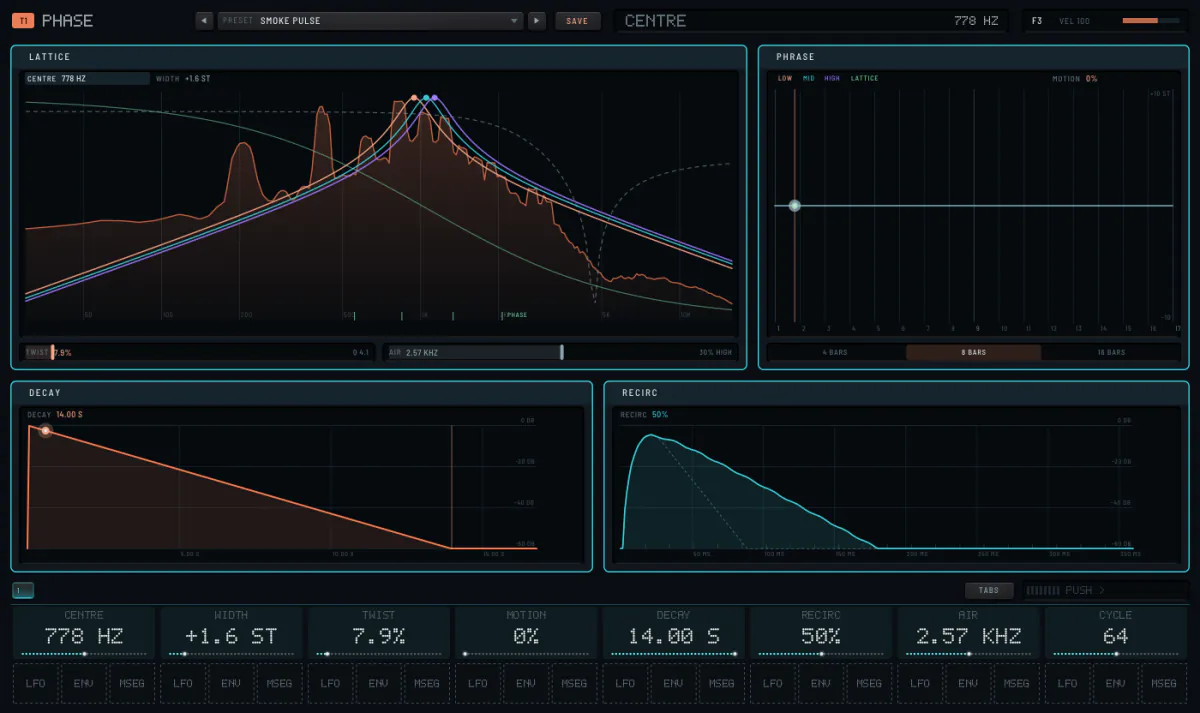
A sustained, vowel-like tone: a saw and noise through four allpass stages, then three linked band-pass filters.
A struck object that can also drone: a noise burst, then quiet continuous noise, excites four resonant modes.
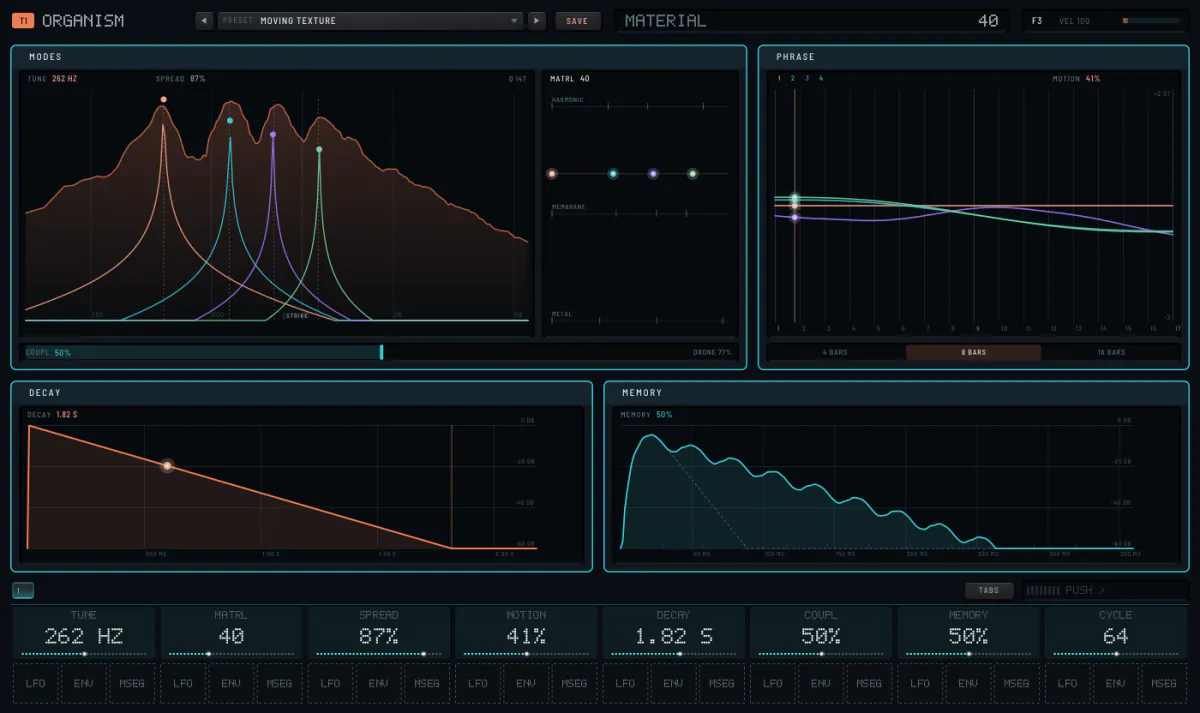
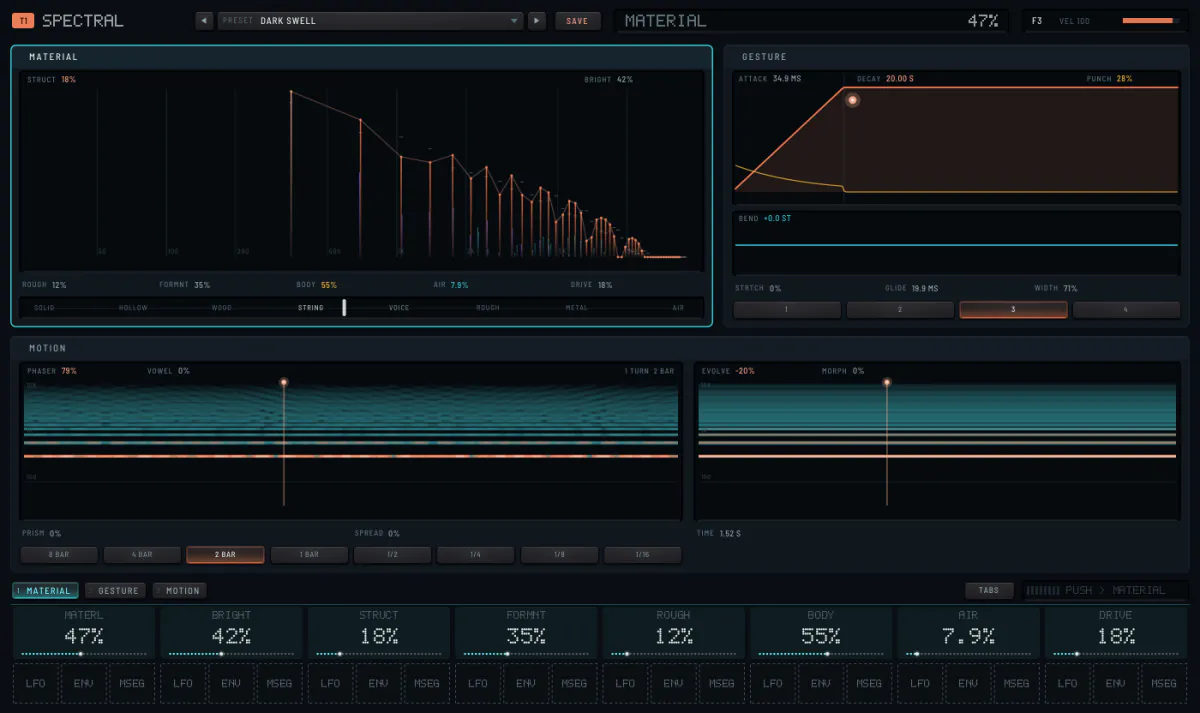
An additive instrument that models materials rather than waveforms.
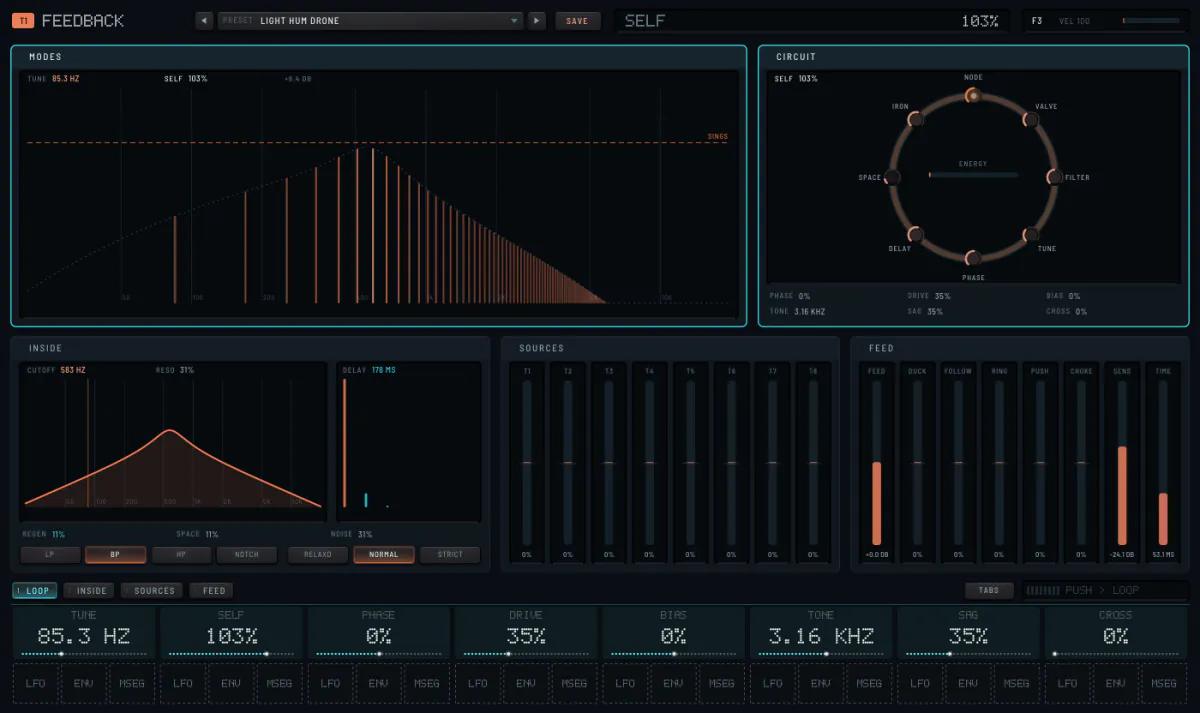
A self-sustaining loop of a summing node, a valve stage, a filter and a short delay.
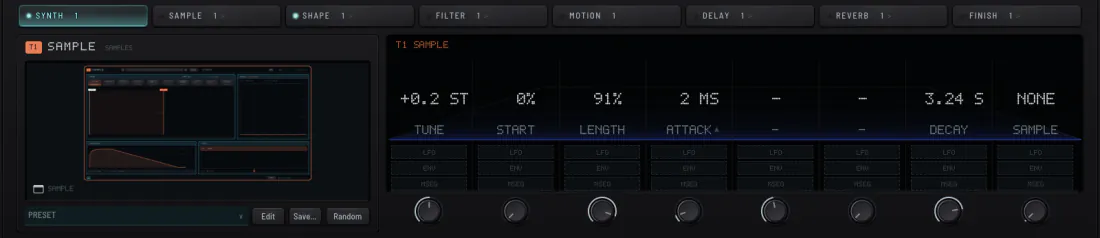
Plays a recording from the project's pool, in stereo, up to eight notes at once. Every track has a sampler as its second source too.
Plays a baked recording of one step: a short pattern asset made from what you played.